Machine setup review
Confirm head count, electrical access, floor clearance, thread storage, garment flow, and safe operator movement before the equipment is placed.
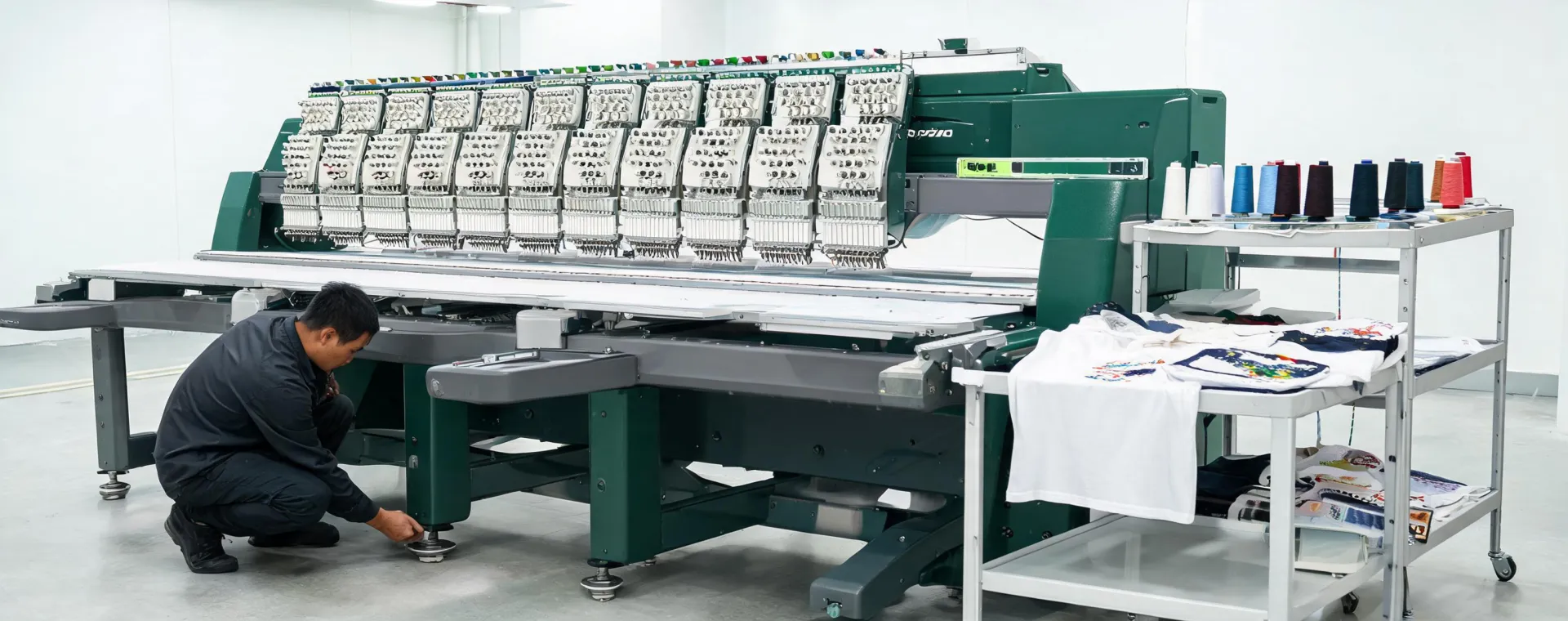
Machine selection is only the first decision. A dependable embroidery room also needs floor layout planning, operator routines, hooping discipline, sample approval habits, and service communication that remains clear after the machine is commissioned.
Barudan support is framed around production realities rather than generic equipment language. Decorators need to know how a machine arrives, how the first operators are trained, how cap frames and tubular goods are handled, and how service information flows when an urgent order is waiting. The service program below separates those needs into clear workstreams so managers can assign responsibilities before installation day.
Confirm head count, electrical access, floor clearance, thread storage, garment flow, and safe operator movement before the equipment is placed.
Train teams on startup checks, needle changes, tension observation, cap framing, hoop alignment, and first-article approval routines.
Document settings, accessory choices, and repeat-order notes so supervisors can keep quality expectations consistent between shifts.
Embroidery bottlenecks often appear where responsibilities are vague: a file is accepted without stitch review, a cap frame is chosen too late, or an operator is handed a repeat order without the exact setup notes. Barudan service planning uses a staged path so commercial teams can see which decision belongs to the distributor, which belongs to the production manager, and which belongs to the operator at the machine.
List the garments, cap volume, stitch density range, and expected daily throughput.
Review space, power, compressed air needs where relevant, lighting, and workflow around finished goods.
Use actual customer work to teach hooping, thread paths, trims, backing, and inspection points.
Capture the settings that keep reorders from becoming new experiments every time.
Tell us what machines you are evaluating, what work is scheduled, and where the production team needs help. A concise request makes it easier to route the conversation to distributor support, training guidance, or configuration planning.