Baby Lock, SE2000, or Used Barudan: Which Embroidery Machine Is Actually Cheaper to Run?
Posted on 2026-08-25 by Jane Smith
-
The Framework: Total Cost Beats Sticker Price
-
Upfront Price: What the Sticker Actually Buys
-
Throughput: The Cost Hiding in Every Stitched Piece
-
Hoops and Accessories: The Quiet Money Pit
-
Beaded Embroidery and the Orders You Can't Take
-
Maintenance, Downtime, and Resale
-
My Pre-Purchase Checklist
-
So Which Do You Actually Buy?
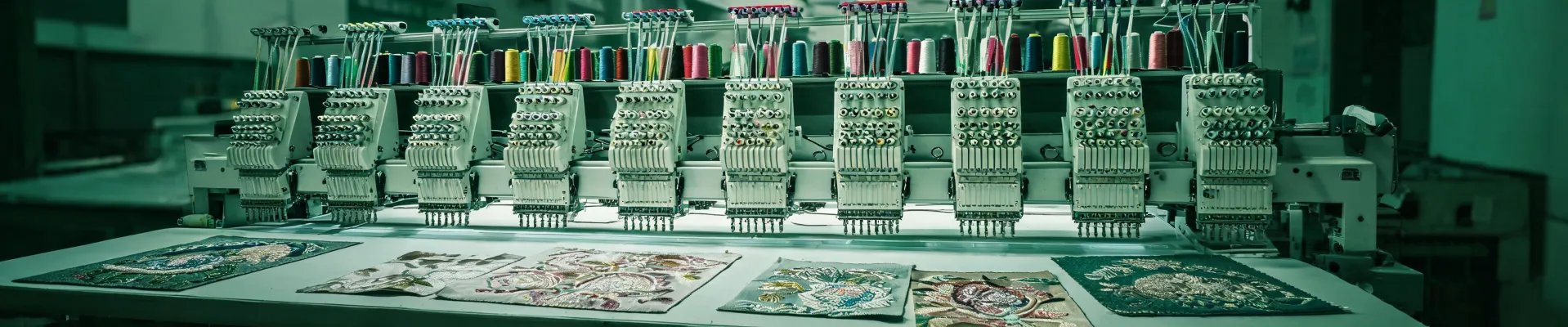
If you're weighing a Baby Lock embroidery and sewing machine — or a popular SE2000 embroidery machine — against a used Barudan multi-head, the first thing I'll tell you is that you're not comparing two embroidery machines. You're comparing two business models that happen to both stitch thread.
I run a small contract embroidery shop, and I've been handling production embroidery orders for seven years. I've also personally made — and documented — four significant equipment mistakes totaling roughly $8,000 in wasted budget. I'm writing this down because every one of those mistakes came from comparing sticker prices instead of total cost.
In 2017, I bought a Baby Lock sewing-and-embroidery combo for around $6,500. From the outside, that looked like the obvious move. A used Barudan embroidery machine sat in the $25,000 range, and 'I'll grow into it' felt like a responsible plan. Two years later, I sold the Baby Lock for $3,200 and bought a used 6-head Barudan anyway. This article is the walkthrough I wish someone had given me in 2016.
One thing before we dig in: this is not a 'Barudan is better' article. If you're making gifts and small batches, the home machine is the correct purchase. What I'm going to do is compare both on the five dimensions that actually determine what a machine costs you over three to five years. The sticker price is the least useful number in the whole equation.
The Framework: Total Cost Beats Sticker Price
'Total cost of ownership' sounds like corporate fluff until you've paid the difference out of your own account. Here's what it includes for an embroidery machine:
- Purchase price and what you realistically get back when you sell
- Hoops and accessories — nobody quotes these until checkout
- Throughput: the labor cost hiding inside every finished piece
- Maintenance, downtime, and electrical setup
- Orders you can't take because the machine simply can't do them
That last one is the killer. The real cost of my home machine wasn't the $6,500 I paid for it. It was the revenue I couldn't generate with it. Put another way: the question isn't which machine is cheaper to buy. It's which one is cheaper to run.
The classic advice is 'start with what you can afford.' It sounds responsible. It ignores one thing: if the machine can't handle the volume you're actually aiming at, you're not starting small — you're buying twice.
Upfront Price: What the Sticker Actually Buys
Let's get the obvious numbers on the table.
A new home-class sewing-and-embroidery combo — the SE2000 is a popular example, and Baby Lock has a whole lineup in the same class — runs from roughly $1,500 to $7,000+ depending on features (based on current dealer listings, early 2025; verify current pricing). A used 6-head Barudan, ballpark, lists between $18,000 and $35,000 depending on year, stitch count, and whether you're buying from a dealer or a private owner (based on used-machinery listings, early 2025; verify current pricing).
That gap is the whole reason people buy the smaller machine. I get it. $25,000 against $1,500–$7,000 is not a sensible comparison on paper.
Except that one of those machines is a consumer product and the other is a production asset. The home machine starts losing value the moment it's unboxed — I lost roughly half of my purchase price in two years. The used Barudan, bought at a fair price, holds its value because there's a global market for it. My 6-head has depreciated around $4,000 over the years I've had it, and most of that is general softening in the used market. From the outside, the $25,000 machine looks like the risky purchase. The reality turned out to be the opposite: the $6,500 machine was the one that bled value.
Throughput: The Cost Hiding in Every Stitched Piece
Here's the number that flipped my thinking.
On a home-class machine, a 10,000-stitch front chest logo takes me 20 to 25 minutes per completed garment, hooping to unhooping. Call it 2.5 to 3 pieces per hour.
On a used 6-head Barudan, the same design runs across six garments at once. One complete run — load, stitch, unload, trim — takes about 20 minutes. That's 15 to 18 pieces per hour with the same single operator.
Now convert that to labor. At $30/hour shop labor, the home machine costs roughly $10 to $12 in labor per piece. The Barudan costs about $1.70 to $2.00. On a 200-piece order, that's a $1,700 to $2,000 difference. On a 1,000-piece corporate order, the Barudan saves over $8,000 in labor versus the 'cheaper' machine — more than the cheaper machine cost new.
For a hobbyist producing 300 pieces a year, this whole comparison is irrelevant. The home machine is the right answer. But if you're planning to sell embroidery to people who hand you money, the cheap machine is the expensive one. At 2.5 pieces per hour, a 200-piece order is 80 hours of machine time. You're not running that alongside a regular sewing schedule. You're turning work away.
Hoops and Accessories: The Quiet Money Pit
Nobody talks about hoops when they're comparing machines. They should.
Barudan embroidery hoops are a system, not an afterthought. Tube hoops, cap frames, and magnetic hoops are standardized across the multi-head line — the same magnetic hoop that fits a used 6-head will fit a newer 12-head. That means your hoop investment carries when you upgrade. A magnetic hoop runs $300 to $600 new (based on supplier listings, early 2025), and there's a genuine used market. It's real money, but it's a capital asset that follows the machine.
Home-class machines use brand-specific hoops. They're cheaper individually — typically $50 to $150 — but you're locked into a closed ecosystem, and none of it transfers to an industrial machine later.
I paid the idiot tax here. In 2018, I ordered 60 polos for a landscaping company and saved money with a set of aftermarket 'compatible' hoops. The fabric shifted mid-hoop on roughly 40 of them. $1,100 in blanks and about 30 hours of labor went into the reject pile. The machine was fine. The hoops were garbage. That's the day I learned the hoop is the last component to buy second-rate. Trust me on this one.
Beaded Embroidery and the Orders You Can't Take
If beaded embroidery is anywhere in your future, the comparison ends quickly.
Beaded embroidery is an industrial category. A beaded embroidery machine — or a bead attachment on a multi-head Barudan — runs bead after bead at production speed. There's no home-machine equivalent. When I only had the home combo, 'can you do beaded?' was a question I had to answer with no. Now I take those orders once or twice a month.
That's a total-cost item even if you never buy the bead attachment. It's availability. It changes the kind of work you're positioned to win.
Maintenance, Downtime, and Resale
This is where people assume the industrial machine becomes the money pit. That assumption isn't quite right.
Home machines are sealed consumer products. When something fails, it goes to an authorized dealer and you wait. In 2018, my machine's motherboard died: three weeks of turnaround, a $520 repair bill, and zero production capacity for the entire stretch. The invoice didn't capture what three dead weeks cost a tiny business.
Barudan has a genuine service network, plus an independent market for parts and technicians. That doesn't mean you skip your homework. My most expensive Barudan lesson: I bought my 6-head from a private seller who said it was 'recently serviced,' didn't test-sew before paying, and then spent $1,400 getting the rotary hook timing right. That one was entirely on me — it's the first item on the checklist below.
And resale? I touched on it above. Search 'used barudan embroidery machine for sale' on any machinery marketplace and you'll see what these machines are worth after years of production use. That resale strength is a market signal. The home machine's resale market is 'local hobbyist.' Both markets are real. They just tell you very different things about the asset.
My Pre-Purchase Checklist
I now keep this list on the wall next to the digitizing station. It has stopped more bad buys than I can count.
- Test-sew on the actual machine — a cap, a fleece garment, and a slippery performance fabric. Not just a flat cotton tee.
- Check stitch count, year of manufacture, and service records. Ask for the manual and confirm board revisions.
- Run a full 10,000-stitch logo at speed and watch for skipped stitches, tension drift, or misregistration.
- Price the electrical setup before you commit — a dedicated 220V circuit, air compressor, possibly a phase converter.
- Budget for professional digitizing. I once wrote off $900 in materials to a cheap auto-digitized file. That's mistake number four, and it's on this list so you don't have to file it yourself.
- Calculate TCO: purchase price minus realistic resale value, plus hoops, maintenance, and labor cost per 1,000 pieces.
So Which Do You Actually Buy?
Let's be specific.
Buy the home-class machine if you're making gifts, sampling, or selling occasionally at a market. Low upfront cost, small footprint, and simplicity genuinely win at low volume. Buy from a local dealer who offers training and service, and enjoy it. This isn't a consolation prize — it's the right tool for that job.
Buy the used Barudan if you're taking money for production work, or if you have a realistic 12-month plan to sell production quantities. A 4-head or 6-head is the sweet spot for a small shop. Budget for the inspection, electrical setup, and a proper hoop collection. Do that before you pay, not after.
If you're genuinely on the fence: don't buy either yet. Send work to a contract embroiderer for a few months. Learn what your actual order volume and project mix look like — caps, fleece, beaded work, runs of 50 versus runs of 500. That information is worth more than any spec sheet.
Bottom line: the machine that costs you less is the one that produces for the volume you actually need. For me, the home combo was a $6,500 lesson in a $25,000 question. It took years and roughly $8,000 of documented mistakes to understand that the right question isn't 'which is cheaper?' — it's 'cheaper per what?'
Build that habit before you buy. The machine will follow.
Pricing in this article is for general reference only, gathered from public dealer and used-machinery listings in early 2025. Verify current rates and machine availability before making a purchase decision.

Jane Smith
I’m Jane Smith, a senior content writer with over 15 years of experience in the packaging and printing industry. I specialize in writing about the latest trends, technologies, and best practices in packaging design, sustainability, and printing techniques. My goal is to help businesses understand complex printing processes and design solutions that enhance both product packaging and brand visibility.