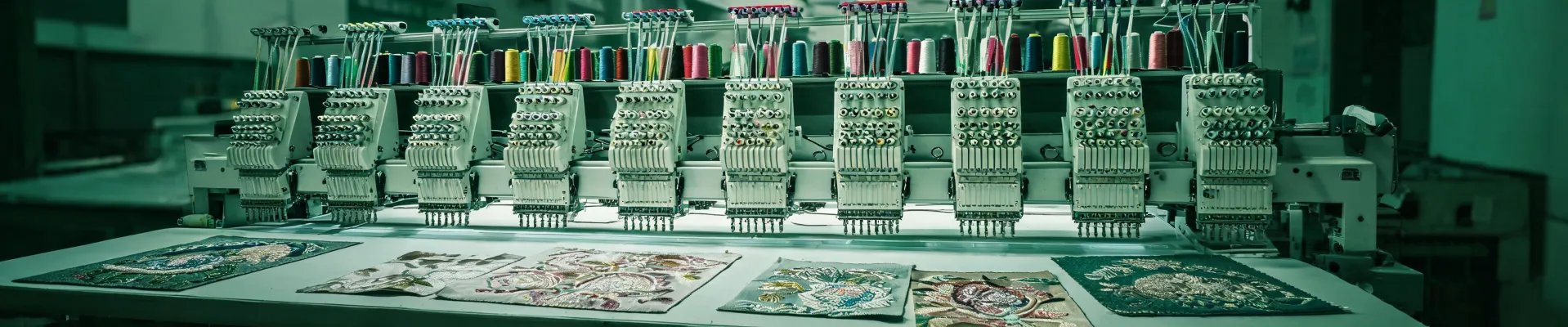
The Real Barudan 6 Head Embroidery Machine Price: A Procurement Manager’s Story
Posted on 2026-09-04 by Elise Marceau
-
The day the quote had four extra pages
-
Who does the math
-
The used machine detour
-
What a friend’s old serger taught me about cleaning
-
Why a Capella embroidery machine stayed in the comparison
-
Magnetic hoops for Barudan embroidery machine: the $2,800 question
-
What embroidery machine innovation really changed this purchase
-
What arrived and what I would do differently
-
The three questions I use now
The day the quote had four extra pages
In January 2025, I sat across from a dealer in Atlanta with the kind of quote that makes a procurement manager nervous. The first page said $78,500 for a new Barudan 6 head embroidery machine. The next four pages said why that number was not the whole number.
$78,500 — base machine with cap driver and standard hoops
$1,900 — freight to our loading dock
$4,200 — installation and two days of operator training
$1,650 — frame package for left-chest and varsity jobs
$2,800 — optional magnetic hoops for Barudan embroidery machine
I circled the magnetic hoop line and wrote a single word: pending. In my mind, $2,800 was tooling, not production capacity. I was ready to cut it from the final number until our head embroiderer tested a demo set. But that part of the story came after I nearly made a much bigger mistake.
Who does the math
I work at a 14-person contract embroidery shop. I handle procurement, and since 2019 I have tracked every equipment invoice, service call, and spare part order in a shared spreadsheet. As of March 2025, that file tracks a little over $417,000 in spending across machines, hoops, needles, thread sensors, and repairs.
The spreadsheet started in an unglamorous way. In 2021, I approved an order based on a clean base quote without checking the consumables budget. That mistake cost about $1,600 in unplanned thread and backing material, plus a week of rushed purchasing. Since then, the total cost has to make sense across five years, not five months.
So when someone asks about a Barudan 6 head embroidery machine price, I do not quote the first page. I quote the whole folder. Freight, installation, training, tooling, the first spare parts kit, and scheduled service visits are all part of the price.
The used machine detour
Before I approved the new machine, I spent three weeks looking at a used Barudan 6 head listed at $42,000. It was a serious saving, and I wanted it to work. The machine was three hours away. It sewed a clean logo on fleece during the test, and the owner showed me a service invoice dated one month earlier.
Then I asked for two years of maintenance records. There were none. No tension log, no frame alignment notes, no record of when the rotary hook was last changed. The machine looked clean, but I could not verify the mechanical history. I decided to pass.
A clean exterior is not the same as a maintained interior. Cleaning removes dust and old oil. It does not tell you whether timing is within specification or whether moving parts are about to fail.
What a friend’s old serger taught me about cleaning
That same week, a friend bought an old serger at an online auction and asked for help. Her search bar showed 'how to clean sewing serger machine old' and she had planned to spend the weekend with a bottle of oil and a brush.
The lint came out, the thread path was cleaned, and we oiled only the points shown in the manual. The machine still sounded wrong. The timing was off. Cleaning could not fix that. A technician reset the timing and the repair bill was $135.
If I had bought the used Barudan without service records, I would have been doing the same thing: making a machine look ready without actually knowing whether it was.
Why a Capella embroidery machine stayed in the comparison
My job is not to fall in love with a brand. I put a Capella embroidery machine in the comparison too. A separate dealer quoted it at $4,500 less than the Barudan base machine. In a short demo, the Capella machine sewed the same test file smoothly. The control screen was intuitive, and the stitch quality looked clean.
I did not choose based on that demo. I chose based on the written service plan. The Barudan dealer had a local technician, a fixed price for preventive maintenance visits, and a two-day response time for non-emergency work. The other dealer was professional, but in our area the support route was less certain. A machine that sews beautifully still costs the same money when it sits waiting for a technician.
Magnetic hoops for Barudan embroidery machine: the $2,800 question
I marked magnetic hoops for Barudan embroidery machine as optional. The dealer did not push them. Our head embroiderer did after one afternoon with the demo set. Her verdict was shorter than the test: the hoops made setup consistent, and consistency is what lowers rework.
I still do not think they are essential for every shop. If you run one hoop size all day and your operators have perfect muscle memory, the payback is slower. For us, the value is flatter fabric, less repositioning, and less guessing when a new operator starts. They do not speed up the needle. They speed up the time between jobs, which is where we lose the most time.
What embroidery machine innovation really changed this purchase
People ask me what embroidery machine innovation matters in a buying decision. Honestly, I care less about the newest controls than about the systems that prevent unplanned stops. Thread break detection, easier tension access, and a machine that communicates before a problem becomes a breakdown are all worth something.
The bigger innovation in this purchase was not in the brochure. It was a dealer who asked about our power supply, air pressure, and operator training before the machine arrived. That kind of process is harder to find than a new touchscreen, and it is why prevention beats correction.
What arrived and what I would do differently
We ordered the machine in February, and it arrived in March. The dealer spent two days with four operators. The magnetic hoops were in the crate. We built the cleaning checklist before the first production run, not after.
The total project cost was about $89,050. That is not the market price for every Barudan 6 head; it is our price, from our quote, in our region, in early 2025. It includes the purchase, freight, installation, training, frame package, and hoop system.
It does not include the $1,800 we spent updating digitizing software because older files did not convert cleanly. That mistake was mine. I checked the machine specs but did not verify the software path before installation. If I had used the same rule backward, I would have caught it in the first week.
The used machine would have looked better on the budget report. But without maintenance records, it was not a safer machine. It was a risk with a lower sticker. I would rather pay for prevention now than pay a bigger invoice later.
The three questions I use now
When I compare embroidery equipment now, I ask these three questions before I look at the price:
- Can the seller show the service history?
- Is support response time written into the contract?
- Does the tooling reduce a recurring risk?
That old serger became a useful machine after a technician reset it. It also became my reminder that searching 'how to clean sewing serger machine old' was not the same as verifying what was actually wrong. The same lesson applied to a much bigger purchase: a thorough check before a decision is the cheapest maintenance I know.

Elise Marceau
Elise Marceau is an LED display and digital-signage systems analyst covering LED video walls, modular screens, transparent LED, control processors, and indoor or outdoor signage. She applies IEC 62368-1 safety principles while comparing pixel pitch, luminance, contrast, refresh rate, colour uniformity, viewing angle, ingress protection, power density, module serviceability, and signal redundancy. Her specification guides help integrators, venue operators, retailers, and procurement teams align viewing distance, ambient light, content format, installation access, electrical load, and lifecycle support.