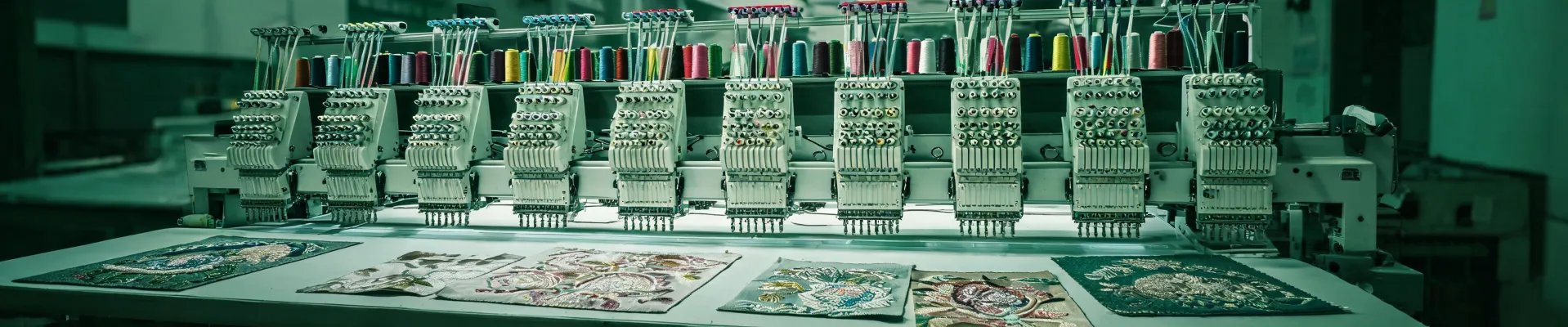
Barudan 6-Head Embroidery Machine: Used-Market Buying Guide and Honest Alternative Comparisons
Posted on 2026-08-26 by Jane Smith
-
Why is a Barudan embroidery machine 6 head model such a common production workhorse?
-
What should I check before buying a used Barudan embroidery machine for sale?
-
How much does a used Barudan 6-head embroidery machine cost?
-
Is an embroidery Dahao machine a real alternative to a used Barudan?
-
What about a SmartStitch embroidery machine?
-
What do Bernina 500 embroidery machine reviews tell a production shop?
-
What's the one mistake that costs buyers the most?
I'm the purchasing administrator for a contract embroidery company—about 20 employees and five multi-head machines. I don't spend eight hours a day at the machine, but I'm the one who has to justify capital purchases to finance. Back in 2021, when I took over purchasing, I knew embroidery threads and hoop sizes. I did not know how to buy a used multi-head machine. (That education was expensive.)
This FAQ is the guide I wanted before I placed a bid on an auction listing. It covers the used Barudan market, the 6-head decision, and the alternatives people ask me about—Dahao machines, SmartStitch, and that Bernina 500 your neighbor keeps praising.
Questions this guide answers:
- Why is a Barudan embroidery machine 6 head model such a common production workhorse?
- What should I check before buying a used Barudan embroidery machine for sale?
- How much does a used Barudan 6-head embroidery machine cost?
- Is an embroidery Dahao machine a real alternative?
- What about a SmartStitch embroidery machine?
- What do Bernina 500 embroidery machine reviews tell a production shop?
- What's the one mistake that costs buyers the most?
Why is a Barudan embroidery machine 6 head model such a common production workhorse?
Because the installed base is enormous. That sounds circular, but it's practical: when a machine goes down, parts and technicians are easier to find. The Barudan brand has been in industrial embroidery for decades, and the 6-head configuration is the sweet spot for contract shops that need volume without the floor space of a 10- or 12-head machine.
It's tempting to think six heads means six times the output of a single-head machine. It doesn't. Thread breaks, hooping, and design setup eat into every run. But a well-maintained 6-head Barudan will do more in a day than a row of home machines will do in a week.
The short version: you buy Barudan for dependability, not for the excitement. That's fine. Excitement is expensive.
What should I check before buying a used Barudan embroidery machine for sale?
Let me start with the mistake I almost made. In my first year, I found a used 6-head listed at a price that looked amazing. The seller said it was "production ready." I checked the stitch counter, opened a couple of needle panels, and was ready to sign. Then I asked for a stitch test.
We ran a simple design on all six heads. Two heads were out of timing. The seller did cover it before delivery, but only because I asked. If I hadn't, that would have been a $2,000 repair—and weeks of missed work.
Three things matter to me: stitch quality, every head working, and maintenance records. In that order.
- Run a stitch test on the fabric you actually use. Not felt. Not a clean nylon sample. Your production fabric.
- Test every head and every needle position. A machine can look fine in head 1 and miss stitches in head 4.
- Run a color change sequence. Listen for hesitation.
- Test a cap frame if you embroider caps. Cap clamping is unforgiving.
- Ask for the maintenance log. If there isn't one, adjust your price.
- Look under the machine. Oil leaks on the floor tell you more than a polished cover.
- Boot it cold. Leave it off long enough to cool, then turn it on. A controller that fails on startup is a bad sign.
A checklist is the cheapest insurance. It really is. Five minutes of verification beats five days of correction.
One more thing: if you're embroidering a brand logo, compare the thread to the Pantone number in the approval artwork. Monitors lie. Pantone gives you a common language.
How much does a used Barudan 6-head embroidery machine cost?
Before I give numbers, the caveat: prices move with market, machine age, hours, and condition. I saved listings on used-equipment sites from December 2024 through February 2025. The used 6-head Barudans I tracked ranged from about $14,000 to $45,000. On the low end, expect older machines, more hours, or visible wear. On the high end, expect a machine from a shop that kept records.
For reference, used single-head Barudans were more in the $4,000–$9,000 range during that same period. That's based on public listings, as of January 2025—not a quote, not a promise.
The part I didn't understand at first: the cheapest machine is often the most expensive. A $14,000 Barudan that needs two heads rebuilt can cost $5,000 in parts before you run a single order. A $28,000 machine with a service log and a clean stitch test is cheaper in the long run.
When we bought our last 6-head, I compared around 12 listings. Maybe 12 is doing a lot of work there—I'd have to check my spreadsheet. The point is, I didn't buy by price. I bought by evidence.
Is an embroidery Dahao machine a real alternative to a used Barudan?
Dahao is a name that comes up constantly in embroidery machine searches. They're a major manufacturer of control systems, and you'll also see complete machines sold under the Dahao name. They're usually positioned as a budget-friendly entry point.
I'm not going to tell you every Dahao machine is bad, because that's not true and it's not the point. The real question is production risk. A Barudan has a huge support network after decades in the industry. Dahao machines have a growing user base, but parts and technicians may not be on the same level depending on where you're located.
If you're comparing a new Dahao machine and a used Barudan at the same price, don't just compare the sticker. Put a number to these:
- Local tech who can actually repair it
- Shipping cost for parts
- Service documentation
- Resale value in five years
If the Dahao machine checks all those boxes, good. If the only advantage is price, that's an expensive advantage.
What about a SmartStitch embroidery machine?
SmartStitch is another name that comes up when shop owners are looking to save money up front. They're a smaller brand, often compared to Barudan in online forums because both make multi-head machines. From what I've seen on dealer listings and at trade shows, SmartStitch has made the spec sheet look competitive for less money.
My honest position: I haven't managed a SmartStitch machine in production, so I won't give it a rating. What I will tell you is the same thing I tell anyone looking at a lower-cost 6-head: production hours reveal a machine's personality. A machine that sits in a showroom looks great. A machine that runs 10-hour days is different.
If you're considering a SmartStitch embroidery machine, apply the same stitch test and service-log check you'd apply to a Barudan. Then ask this question directly: "Where do I get a technician on Tuesday morning?" If the answer makes you nervous, factor that into the bid.
What do Bernina 500 embroidery machine reviews tell a production shop?
This one is a category mismatch. The Bernina 500 is a single-needle sewing and embroidery machine for home sewists, quilters, and small studios. It is not a multi-head commercial machine. Most Bernina 500 embroidery machine reviews talk about stitch quality, ease of use, and the software experience. Those things matter—for that machine's intended use.
But if you're trying to fill an order of 200 embroidered polos by Friday, no single-needle machine is the right answer, regardless of reviews. That's not a criticism of Bernina. It's a tool made for a different job.
If you're reading this from a home studio, a Bernina 500 might make perfect sense. If you're reading this from a contract embroidery shop, compare it to a Barudan only to confirm why you need a multi-head machine in the first place.
Put another way: a review can tell you a machine stitches smoothly. It can't tell you whether it will pay rent.
What's the one mistake that costs buyers the most?
Skipping the stitch test. That's the mistake. It's tempting to think that a low stitch counter means a machine was treated gently. "Low hours" advice ignores the reality that a machine can be run poorly for 3,000 hours and need major work, while a well-maintained machine with 8,000 hours runs beautifully.
The counter tells you how long a machine worked. It doesn't tell you how it lived. The stitch test does.
I know this sounds obvious, but when you're standing in front of a shiny machine with a "reduced price" tag, obvious goes out the window. That's why I bring a printed checklist now. I even ask the seller to sign off on the stitch test results as part of the bill of sale. Looks a little formal for a warehouse deal, but it has saved me more than once.
That's the whole answer. Test the machine before you buy it. Period.

Jane Smith
I’m Jane Smith, a senior content writer with over 15 years of experience in the packaging and printing industry. I specialize in writing about the latest trends, technologies, and best practices in packaging design, sustainability, and printing techniques. My goal is to help businesses understand complex printing processes and design solutions that enhance both product packaging and brand visibility.