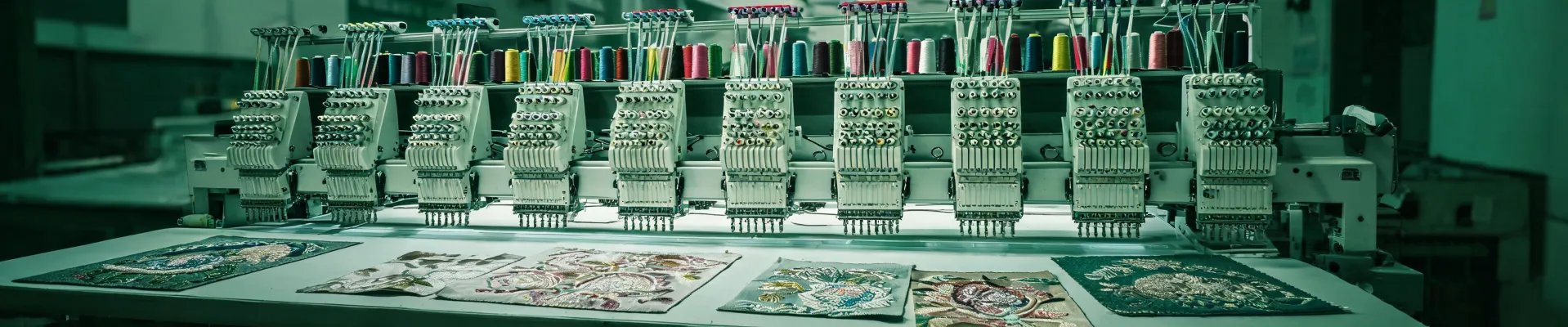
Your Barudan Machine Is Only as Good as Its Hoops
Posted on 2026-08-24 by Jane Smith
Here's the thing: when a shop calls me about a perfectly good Barudan machine that suddenly “can’t hold registration,” the machine is usually not the problem. It’s the hoop. Period.
The question isn’t “Is this 6-head ready to be replaced?” It’s “What’s actually causing the defect?” Because if you replace a machine before you fix the hoop, you’ll still have the same problem. Just with a shinier machine.
What I do and why I care about your hoops
I’m a quality/compliance manager at an industrial equipment company. I review every accessory batch before it reaches customers—roughly 200 items a year. I’ve rejected 11% of first deliveries in 2024 due to hoop alignment issues. Not because I enjoy rejecting things. Because a hoop that looks fine can cost you a full production day.
Barudan machines are engineered to hold tight tolerances over years of production. But the machine is only one side of the interface. The other side is the hoop, the needle plate, and the way they all seat together. Skip any part of that chain and the machine can’t save you.
The surface problem: you think you need a new machine
It starts with skipped stitches. Thread breaks. Left hats that drift half a millimeter between colors. The operator blames the multi-head. The owner starts pricing a new setup. Before anyone looks at the accessory side, the shop is already planning a six-figure purchase.
By the time a machine gets blamed, the shop has already spent days tinkering with tension, changing needles, ordering new thread. The rotary hooks get cleaned. The timing gets checked. The machine runs fine in a test with no hoop at all. Then the operator puts the bad hoop back on and the problem comes back.
Earlier this year, I inspected a specialty line built around an adaptafores sewing machine that feeds appliqué pieces into a Barudan multi-head. The operator was convinced the machine was done. I found a worn industrial sewing machine needles plate with a burr that was catching the thread at exactly the wrong time. One part. Sixty dollars. No new machine.
The deep reason: tolerance stack-up
The real problem is tolerance stack-up. The machine is precise. The hoop mount is precise. But every connection in between adds its own tiny error. If the hoop frame is out of square, if the mounting tabs don’t seat fully, if the needles plate is grooved, the machine’s precision never reaches the fabric.
The difference between good and bad hoops for barudan embroidery machine is rarely visible in a photo. The plastic looked fine in the catalog. The frame looked straight on the screen. But “looks straight” isn’t a specification.
I learned this the hard way. I assumed “same specifications” meant identical performance across hoop vendors. Didn’t verify. Turned out each had slightly different tolerances. Now every contract includes a physical inspection.
Frame squareness
The tolerance we use in audits: no more than 0.5 mm across the front bar. That’s tiny. But hoops get dropped. They get stacked with heavy rolls on top. They get over-opened to fit thick fabric. Over time, the frame relaxes into a slight curve. That slight curve becomes a registration problem after the third or fourth color.
If the front bar is warped, the fabric isn’t held parallel to the needle’s travel. One side of the hoop is closer to the needle than the other. That causes uneven stitch density, not just misalignment. Put another way: it’s not just where the stitch lands; it’s how the stitch forms.
Needle plate wear
Every time I inspect an industrial sewing machine needles plate, I look for burrs and grooves. A worn plate changes thread tension mid-stitch. It catches synthetic threads, breaks them at random, and makes a healthy machine feel like it needs a rebuild. Most shops haven’t replaced theirs in years.
An industrial sewing machine needles plate is not the same as a home sewing machine throat plate. It includes a specific hole position, surrounding bridge, and thread groove all calibrated for the machine’s hook timing. When the groove wears, it changes where the needle meets the loop. You can’t fix that by adjusting tension.
The “new machine” trap
One shop was ready to order a Barudan Creator embroidery machine because their 8-head kept drifting on structured caps. I asked to see their hoops. Two of the frames were visibly bent. They canceled the order. What they needed wasn’t a new machine. It was a new hoop protocol.
Don’t get me wrong: updating to a newer machine can make sense. But if you haven’t verified the accessory chain, you’re carrying old problems into a new investment.
What ignoring this costs you
One bad hoop can ruin 8,000 units in production. I watched it happen. The defect wasn’t obvious until the second color went down, and by then, the first color was in every piece in the batch.
That quality issue cost us a $22,000 redo and delayed our launch by three weeks. The vendor tried to blame “machine wear.” It wasn’t wear. It was a hoop that had been dropped and never checked.
Dodged a bullet when I caught a bad hoop batch before it shipped to a 12-head factory. One more week and it would have meant 15,000 pieces of scrap. It’s not dramatic until you’re the one explaining the delay to a customer.
The cost of rework isn’t just materials. It’s machine minutes. It’s the order that leaves late. It’s the customer who starts looking elsewhere. When quality breaks, trust breaks.
The fix is simpler than you think
Here’s the thing: the fix doesn’t require new machines. It requires verification.
- Check the needles plate. If you can feel a groove with your fingernail, replace it.
- Lay every hoop on a flat table. If it rocks, it’s out of square.
- Verify the hoop seats into the machine mount. No play. No forcing.
- Mark your hoops. If a frame fails inspection, retire it. Don’t let it sneak back into the rotation.
“Compatible” isn’t “identical.” Put another way: a hoop can fit the machine and still not match the machine’s tolerances.
I’m not saying every third-party hoop is bad. I’m saying you need to verify. The surprise wasn’t that the expensive hoop failed. It was that the budget hoop passed. The price didn’t tell us which was better. The flat table did.
What I’d check tomorrow morning
Run a one-color test pattern on each hoop. Check the needles plate with your fingernail. Look at the seating under the machine with a flashlight. Do it before you call a technician. Do it before you start researching a new machine. You might save yourself six figures.
Oh, and add one more step to your routine: inspect hoops the same way you inspect the machine. It’s the last piece of the tolerance chain. Simple.

Jane Smith
I’m Jane Smith, a senior content writer with over 15 years of experience in the packaging and printing industry. I specialize in writing about the latest trends, technologies, and best practices in packaging design, sustainability, and printing techniques. My goal is to help businesses understand complex printing processes and design solutions that enhance both product packaging and brand visibility.