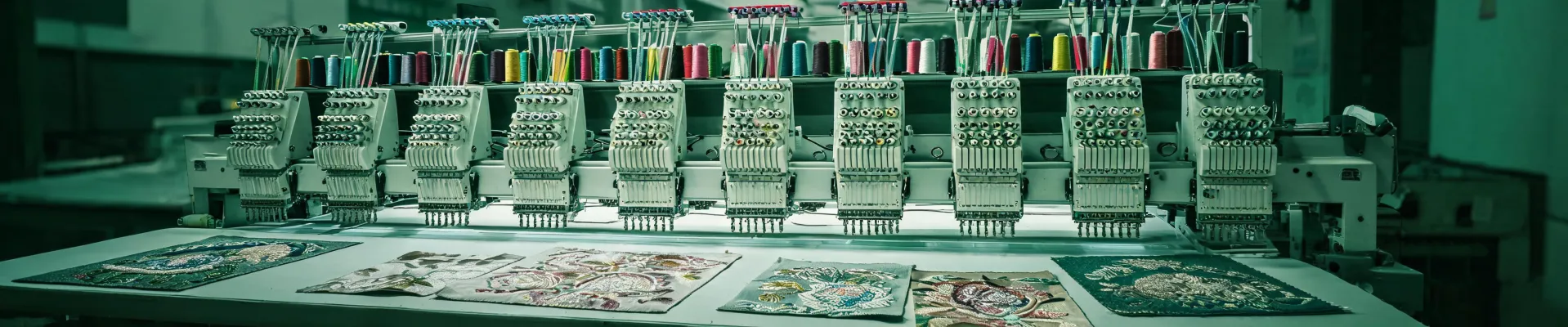
Barudan 4 Head Embroidery Machine FAQ: Rush Orders, Industrial Sewing Types, and Embroidery Machine News That Matters
Posted on 2026-10-09 by Adrian Okafor
-
Is a Barudan 4 head embroidery machine still worth it for rush work?
-
What should I check on a used Barudan 4 head machine before buying?
-
How do industrial sewing machine types fit into an embroidery shop?
-
What embroidery machine news actually matters for production?
-
When is paying more for a Barudan worth it over a cheaper option?
-
Can a 4 head machine handle same-day rush orders?
-
What is the biggest mistake buyers make when comparing embroidery machines?
-
Do I need a 6, 8, or 12 head machine instead of a 4 head?
If you are evaluating a Barudan 4 head embroidery machine, comparing industrial sewing machine types, or trying to separate real embroidery machine news from brochure noise, this FAQ is for you. I coordinate rush production at a contract embroidery company. I have handled 300+ rush orders in 11 years, including same-day turnarounds for apparel brands and teamwear clients. These are the questions I get from owners, production managers, and buyers who cannot afford a missed deadline.
- Is a Barudan 4 head embroidery machine still worth it for rush work?
- What should I check on a used Barudan 4 head machine before buying?
- How do industrial sewing machine types fit into an embroidery shop?
- What embroidery machine news actually matters for production?
- When is paying more for a Barudan worth it over a cheaper option?
- Can a 4 head machine handle same-day rush orders?
- What is the biggest mistake buyers make when comparing embroidery machines?
- Do I need a 6, 8, or 12 head machine instead?
Is a Barudan 4 head embroidery machine still worth it for rush work?
Yes, if you define worth by uptime and predictable finishes. A 4 head Barudan is not the fastest way to run 10,000 pieces; a 6, 8, or 12 head machine wins there. But for short-run teamwear, samples, names, and deadline work, 4 heads give you flexibility and less setup risk. In March 2024, a client called at 6:40 a.m. needing 180 performance polos by the next afternoon. We ran critical panels on a Barudan 4 head while a larger machine handled bulk. Normal turnaround was 4 days. We paid $400 in overtime and courier fees but saved an $18,000 event order. The point: the 4 head did not do everything. It did the part that could not fail. That is the value.
What should I check on a used Barudan 4 head machine before buying?
Forget paint and stitch count alone. Check head timing, trimmers, tension consistency across all four heads, needle bars, and whether the control panel has service history. Ask for maintenance logs and test sew the same file on all heads. Here is something vendors will not tell you: a clean machine with no logs is often a bigger risk than a scuffed machine with documented service. If the seller cannot prove when belts, bearings, and trimmer knives were replaced, budget for that. On a rush job, one head throwing thread at 2 a.m. turns a 4 head machine into a 3 head machine. That is not a discount; that is a deadline risk. (Note to self: always ask for logs before putting money down.)
How do industrial sewing machine types fit into an embroidery shop?
Industrial sewing machine types usually fall into lockstitch, overlock, coverstitch, chainstitch, and embroidery. Most embroidery shops need at least one single-needle lockstitch for repairs and finishing, and an overlock or coverstitch for garment construction or edge finishing. A comfort sewing machine is a different category. It is built for home users and light projects, not 10-hour production days. If you are doing contract embroidery, your core machine is the multi-head embroidery machine; the sewing machines support it. Do not buy a comfort sewing machine expecting industrial output. That is like using a hatchback for freight. It might move one box. It will not move a pallet. Honestly, I have seen more shops slowed down by the wrong support machine than by the embroidery machine itself.
What embroidery machine news actually matters for production?
The useful news is rarely a flashy speed claim. It is parts availability, service response time, software compatibility, and whether a manufacturer is actually shipping updates. What most people do not realize is that new in embroidery machine news often means a new badge on an existing platform. Ask three questions: Can I get a technician in under 48 hours? Are common parts stocked locally? Does the file format work with my current digitizing workflow? Per FTC business guidance, claims must be truthful, not misleading, and substantiated. So when a seller says zero downtime or fastest in class, ask for evidence, not adjectives. If they cannot show service records, parts lists, and real customer outcomes, treat the claim as marketing, not news.
When is paying more for a Barudan worth it over a cheaper option?
When the deadline has a penalty attached. Look, I am not saying budget machines are always bad. I am saying the cheapest invoice can hide the most expensive failure. The numbers said go with the lower-cost used machine. Similar head count, similar footprint. My gut said no because the seller was slow to answer basic service questions. We paid more for a Barudan with documented service history. Six months later, we learned the cheaper unit had been sold twice with unresolved board issues. That is the thing about certainty: you do not see its value until you do not have it. For non-critical sampling, cheaper can work. For rush contract work, certainty is the product. Paying extra for a machine that starts every morning is not overpaying. It is buying sleep.
Can a 4 head machine handle same-day rush orders?
Sometimes. Depends on stitch count, file prep, backing, and thread changes. A Barudan 4 head embroidery machine can absolutely save a same-day order if the design is simple, the garments are staged, and the operator knows the machine. Had two hours to decide on a rush order last quarter. Normally I would run production samples first, but there was no time. We checked the file, tested one head, then ran all four. Delivered with 40 minutes to spare. In hindsight, I should have asked for a higher rush fee. But with the client waiting, I made the call with incomplete information. The lesson: same-day is possible when you control variables. It is gambling when you do not.
What is the biggest mistake buyers make when comparing embroidery machines?
They compare purchase price instead of cost per delivered order. A machine that costs $3,000 less but loses two production days a month is not cheaper. It is a payment plan on frustration. From the outside, it looks like vendors just need to sell faster machines. The reality is rush orders often require different workflows: pre-wound bobbins, spare tension assemblies, trained operators, and service backup. If you are buying for commercial embroidery, calculate the cost of one missed deadline. Missing a $15,000 event order can wipe out the savings from a decade of discount parts. Buy for uptime, not for the sticker. That is the bottom line.
Do I need a 6, 8, or 12 head machine instead of a 4 head?
If your work is repeat bulk, yes. More heads mean more pieces per run and lower labor per piece. But more heads also mean longer setup, more thread management, and bigger consequences when one head is off. A 4 head Barudan is the flexible tool. A 6 or 8 head is the production tool. A 12 head is for high-volume contract work with stable designs. The key is matching head count to order profile, not ego. We run a mix because no single configuration wins every job. The bottom line: buy the machine that finishes the jobs you actually sell, with service support you can reach when it does not. Anything else is just a spec sheet.

Adrian Okafor
Adrian Okafor is a professional audio systems analyst specializing in loudspeakers, PA speakers, subwoofers, line arrays, stage monitors, power amplifiers, and audio mixers. He uses IEC 60268-5 measurement methods for applicable passive loudspeakers while comparing frequency response, sensitivity, maximum SPL, nominal impedance, dispersion, crossover behavior, amplifier headroom, limiter settings, and rigging loads. His system guides help sound designers, rental companies, venues, and installers match acoustic coverage, audience capacity, deployment geometry, power distribution, monitoring needs, and safe operating margins.