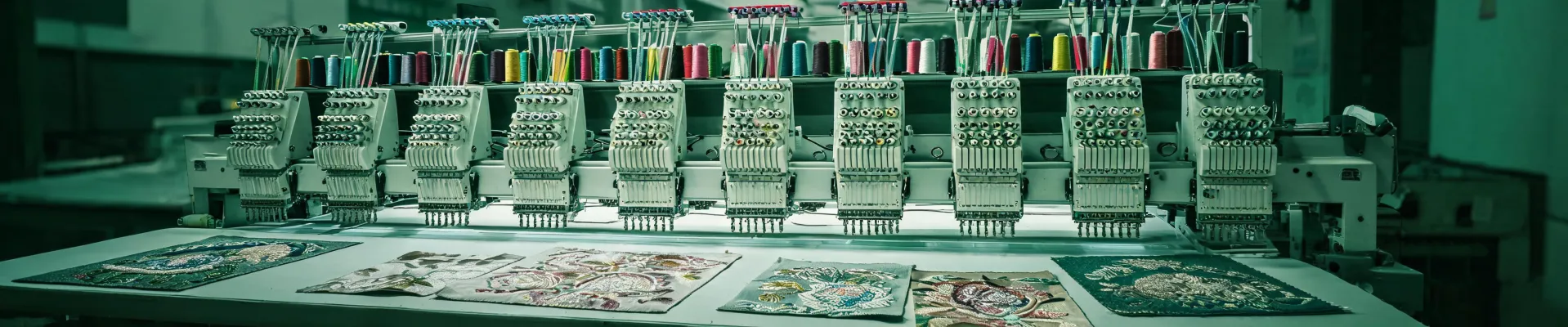
Barudan Embroidery Machine FAQ: 6-Head, Hat Machines, Loans, and Small-Shop Reality
Posted on 2026-09-30 by Nadia El-Sayed
-
Questions I hear before a Barudan purchase
-
What should I inspect on a used Barudan embroidery machine?
-
Is a barudan embroidery machine 6 head too much for a small shop?
-
What makes a barudan hat embroidery machine different?
-
How should I compare a Barudan with a Vango embroidery machine?
-
Can I get an embroidery machine loan if my order volume is small?
-
Which sewing machine foot industrial setup do I need for finishing?
-
What hidden cost shocks buyers after installation?
-
What spec do most buyers overlook?
Questions I hear before a Barudan purchase
I'm a quality and brand compliance manager at a contract embroidery shop. I review every machine spec, first article, and sample run before it reaches customers—roughly 200+ sample runs a year. In our Q1 2024 quality audit, I rejected about 12% of first deliveries due to registration and tension issues. These are the questions I'd want answered before writing a check for a Barudan—or any industrial embroidery machine.
- What should I inspect on a used Barudan embroidery machine?
- Is a barudan embroidery machine 6 head too much for a small shop?
- What makes a barudan hat embroidery machine different?
- How should I compare a Barudan with a Vango embroidery machine?
- Can I get an embroidery machine loan if my order volume is small?
- Which sewing machine foot industrial setup do I need for finishing?
- What hidden cost shocks buyers after installation?
- What spec do most buyers overlook?
What should I inspect on a used Barudan embroidery machine?
Start with service records, not cosmetics. A clean 6-head machine can still have worn cam followers, stretched belts, and tired solenoids. I look for head-to-head registration across all needles: sew a 10,000-stitch test file on the same fabric, then compare each head under the same lighting. Check trimmer performance, thread path wear, and hoop-drive backlash. What most people don't realize is that 'reconditioned' can mean anything from a full rebuild to a wiped-down machine with new tension springs. Ask for the service record and part numbers. If you can't see the machine sew under power, walk away—or budget for a full inspection by a technician. As of Q4 2024, used 6-head Barudan listings often ranged from $12,000 to $28,000 depending on year, hours, and accessories; verify current pricing with the seller or Barudan's official dealer network.
Is a barudan embroidery machine 6 head too much for a small shop?
Not automatically. A 6-head Barudan embroidery machine earns its keep when you have repeat production—caps, left-chest logos, small batches that need identical output. If you're doing one-off samples all day, a single-head or 4-head may be smarter. The trap is buying heads you can't fill. I'd rather see a small shop run 4 heads at 80% utilization than 6 heads at 30%. That said, small doesn't mean unimportant—it means potential. A used 6-head can be financed or leased when the numbers make sense. Calculate your monthly payment against realistic billable stitches, not the dealer's best-case scenario. In 2022, we ran a blind test with our team: same logo, 4-head vs. 6-head output. The 6-head didn't stitch better—it just produced more per hour. Buy the heads for throughput, not for bragging rights.
What makes a barudan hat embroidery machine different?
Hat embroidery is a different sport. A barudan hat embroidery machine is usually configured with a cap frame, curved needle plate, and specialized driver that rotates the cap smoothly around the cylinder. The difference isn't just the attachment—it's the machine's ability to hold registration on curved, unstructured panels. I check three things on any hat setup: frame stability, needle clearance near the brim, and whether the machine can handle thick seams without flagging. A standard flat-bed machine with a cap attachment can work for light orders, but if caps are your core product, a dedicated hat configuration saves you from constant re-hooping and rejected samples. At our shop, a bad cap sample once cost us a $3,200 redo and delayed a team order by nine days. Now every hat job includes a pre-production cap sew-off on the exact fabric and backing.
How should I compare a Barudan with a Vango embroidery machine?
Compare the service model, not just the spec sheet. A Vango embroidery machine may fit if your work is light, your budget is tight, and you're testing a niche. A Barudan tends to make more sense when uptime, multi-head consistency, and dealer parts support are the priority. Don't assume one is universally better—define your real workload: stitches per design, caps per week, fabric types, and how fast you need a technician on-site. Ask each seller for the same test file and run it on your fabric. Ask about lead times for needles, hooks, and boards. Here's something vendors won't tell you: the first quote is almost never the final price for ongoing relationships. There's usually room to negotiate training, spare parts, or installation once you've shown you're a serious buyer. Verify current specs and availability with each manufacturer's official source as of January 2025.
Can I get an embroidery machine loan if my order volume is small?
Yes, but you'll need to shop differently. An embroidery machine loan or equipment lease is judged on cash flow, credit, and collateral—not on whether you're already a 50,000-unit shop. I don't have hard data on approval rates for small embroidery businesses, but based on our own $18,000 lease in 2023, lenders cared more about 12 months of bank statements and a clear repayment plan than about our customer list. Some dealers offer in-house financing; others work with specialty equipment lenders. Be ready to explain seasonality. If you're doing 200 caps a month now, show how a machine replaces outsourcing or cuts lead times. Small orders shouldn't be discriminated against, but the loan application still needs to show a path to payment. Ask for the total cost of financing, not just the monthly payment—fees can add 8-15% over the life of the loan.
Which sewing machine foot industrial setup do I need for finishing?
For embroidered goods that need finishing—binding, zippers, piping, or attaching patches—you're looking at a sewing machine foot industrial, not an embroidery foot. A walking foot helps with thick, layered fabrics and prevents the top layer from shifting. A piping foot or zipper foot gives you control along raised edges. If you're trimming and binding caps or bags, a left-guide foot can help keep seam allowances consistent. Match the foot to the machine: a generic presser foot on an industrial lockstitch may fit, but it won't always handle the pressure or speed. Bring a sample of your thickest embroidered fabric to the dealer and test the foot under power. I wish I had tracked needle-break rates by foot type more carefully; anecdotally, switching to the right walking foot cut our rework on heavy canvas by about a third.
What hidden cost shocks buyers after installation?
Installation, training, and freight are the obvious ones. The hidden costs show up later: spare hoops, backing, cap frames, bobbin winders, software upgrades, and a service contract. One shop I know budgeted $15,000 for a used 6-head and spent another $2,800 on missing accessories in the first month. Electrical work can also surprise you—some multi-head machines need a dedicated circuit or phase converter. Ask for a complete accessory list before you sign. What most people don't realize is that 'available now' often means the dealer hasn't inspected the machine yet. A pre-purchase inspection by an independent technician can cost $500-$1,200, but it's cheaper than discovering a bent shaft after delivery. I don't have hard data on how many used machines need immediate repair, but based on our 4 years of buying, I'd budget 10-15% of the purchase price for post-install fixes.
What spec do most buyers overlook?
Head count gets all the attention. The spec I'd check first is hoop clearance and cap-driver compatibility. If your product mix includes thick bags, bulky jackets, or structured caps, a machine with a smaller embroidery field or limited hoop clearance will bottleneck you no matter how many heads it has. Also check the machine's ability to run at lower speeds without tension problems—many shops never use the top speed because registration suffers on stretchy fabrics. And confirm your software can output the right format without a $2,000 converter. In our Q1 2024 audit, the most common first-article rejection wasn't a broken machine; it was a machine that couldn't reach the edge of the hoop the operator needed. Decide what you actually sew, then buy the machine that fits that—not the one with the biggest number on the brochure.
Nadia El-Sayed
Nadia El-Sayed is an industrial vacuum and dust-extraction analyst covering wet and dry vacuums, mobile dust extractors, source-capture units, separators, filters, and collection systems. She uses IEC 60335-2-69 for applicable commercial vacuums and dust extractors while comparing airflow, static pressure, filtration class, filter area, dust-loading behavior, automatic cleaning, container volume, hose loss, noise, and continuous-duty limits. Her application guides help workshops, factories, contractors, and safety teams match dust characteristics, capture demand, disposal method, electrical supply, and exposure-control procedures.