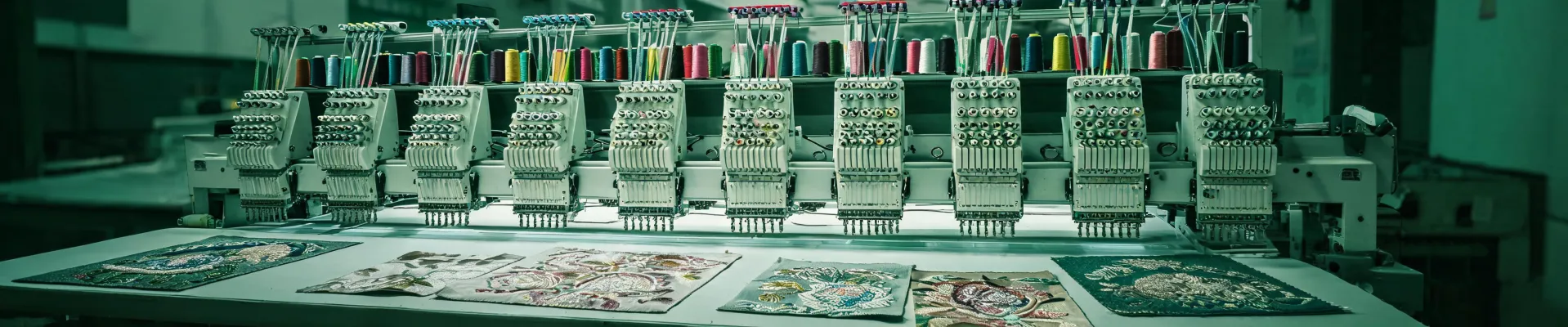
Barudan Single Head vs Brother 5 Needle: A Quality Inspector's Comparison for Small Embroidery Shops
Posted on 2026-09-23 by Elise Marceau
-
Why I'm Comparing These Two—and Why Small Orders Matter
-
The Comparison Framework: Five Dimensions That Decide It
-
1. Stitch Quality and Registration: Industrial Consistency vs Prosumer Convenience
-
2. Hoop and Accessory Ecosystem: The Hidden Cost
-
3. Maintenance, Parts, and Service Downtime
-
4. Small-Order Flexibility: Who Actually Wants Your $200 Job?
-
5. Training, Software, and Daily Workflow
-
Which Should You Choose?
Why I'm Comparing These Two—and Why Small Orders Matter
I'm a quality and brand compliance manager at a commercial embroidery company. I review every machine, hoop, and accessory before it reaches production—roughly 60 items a year. I rejected 18% of first deliveries in 2023 because specs didn't match. So when small shops ask me about the Barudan single head embroidery machine versus a Brother 5 needle embroidery machine, I don't give a generic answer. I compare what actually fails on the floor.
Here's the thing: small orders aren't a nuisance. They're how you learn. A 12-piece run can teach you more about a machine than a 1,200-piece run. So I'm comparing these options with small-batch reality in mind. If a vendor treats your $200 order like it's not worth the time, that's a red flag. Simple.
The Comparison Framework: Five Dimensions That Decide It
I'm not going to list every spec. That's a spreadsheet's job. I'm looking at five dimensions that cause rework, delays, and refunds:
- Stitch quality and registration on tricky fabrics
- Hoop and accessory ecosystem (especially embroidery hoops for Barudan)
- Maintenance, parts, and service downtime
- Small-order flexibility and changeover speed
- Training, software, and daily workflow
I'm not a mechanical engineer, so I can't speak to servo motor tolerances or board-level electronics. What I can tell you from a quality review perspective is how these dimensions show up in rejected batches and missed deadlines.
1. Stitch Quality and Registration: Industrial Consistency vs Prosumer Convenience
Barudan single head embroidery machine: Built for commercial production. Registration is usually tighter on stretchy fabrics, caps, and thick knits. When you run the same design across 50 pieces, the stitch count and density stay consistent. That matters if you're selling branded apparel.
Brother 5 needle embroidery machine: Great for samples, small runs, and mixed materials. The 5-needle setup reduces manual thread changes. But on high-pile fleece or structured caps, I've seen more puckering and thread breaks than on a dedicated industrial head.
Which wins? For repeatable commercial quality, Barudan. For prototyping and small custom jobs, Brother. Not a controversial take—but that's the honest split.
2. Hoop and Accessory Ecosystem: The Hidden Cost
This is where small shops get burned. You buy a machine, then realize the hoops don't fit your existing brackets. I said 'standard hoop' to a supplier in 2022. They heard 'whatever fits.' Result: 30 hoops that didn't match our Barudan brackets. We ate the return shipping and lost two weeks.
Barudan: Embroidery hoops for Barudan are widely available, but you need to verify bracket type, hoop size, and magnetic vs clamp style. Genuine and aftermarket options exist. Aftermarket can work—if the tolerances are right.
Brother 5-needle: Hoops are usually proprietary to the model. There's less cross-compatibility. That's fine for a single machine, but it locks you in.
If you already own an Adaptafores sewing machine or a Bright sewing machine, you might think you can adapt those hoops. Don't assume. Sewing machine hoops and embroidery machine hoops are different animals. Check the attachment points before you buy.
3. Maintenance, Parts, and Service Downtime
The numbers said the Brother 5-needle was cheaper per needle. My gut said stick with the Barudan single head. Turns out the gut was right—for our situation. The Brother needed more frequent tension adjustments and had fewer local service options. That 'cheaper' machine sat idle for 11 days waiting on a part.
Barudan: Parts and service networks are established in many industrial markets. Uptime is the selling point. But you'll pay for it. Used Barudan machines can be a good value if you verify hours and service history.
Brother 5-needle: Parts are usually easy to order, but technician availability varies. If you're in a rural area, you might be your own technician.
Per FTC guidelines (ftc.gov), vendors must substantiate performance claims. So when a listing says 'industrial-grade,' ask for a stitch test on your fabric. Don't accept a brochure.
4. Small-Order Flexibility: Who Actually Wants Your $200 Job?
This is where my bias shows. I believe small orders deserve good service. A 10-piece order today can become a 10,000-piece order in three years. I've seen it happen.
Barudan single head: Fast changeover for single-head work. You can run one-offs without tying up a multi-head line. If you're a contract embroiderer, this is a flexible workhorse.
Brother 5-needle: Also flexible, but slower on bulky items. The 5 needles help with color changes, but hoop changes are still manual. For very small orders, it's a solid entry point.
What about Adaptafores sewing machine or Bright sewing machine conversions? Some small shops try to embroider with a sewing machine and a hoop frame. It works for simple monograms. It doesn't scale. If you're doing more than 20 pieces a week, you'll want a dedicated embroidery machine.
5. Training, Software, and Daily Workflow
Barudan: Usually comes with industrial embroidery software or works with commercial digitizing formats. The learning curve is real. But once you're trained, workflow is repeatable.
Brother 5-needle: Often has a friendlier interface and built-in designs. Easier for a solo operator. But you may outgrow the software if you need precise edits.
I'm not 100% sure which is better for every shop. It depends on your order mix. If you do lots of sample-heavy work, Brother. If you do production runs, Barudan.
Which Should You Choose?
Here's the scene-based advice:
- Choose a Barudan single head embroidery machine if: You need consistent commercial quality, you run repeat orders, and you can support the maintenance. Buy used from a reputable dealer and verify embroidery hoops for Barudan fit your brackets.
- Choose a Brother 5-needle embroidery machine if: You're starting out, your runs are under 50 pieces, and you want a lower entry cost with easier software.
- Consider Adaptafores sewing machine or Bright sewing machine only as a supplement: They're sewing machines first. Embroidery attachments exist, but they're not a replacement for a dedicated embroidery head.
Small doesn't mean unimportant—it means potential. A good supplier or dealer will treat your first order like it matters. If they don't, walk away. That's the real test.
Prices and availability change. Verify current specs, service terms, and hoop compatibility before you buy. For performance claims, check FTC guidance at ftc.gov.

Elise Marceau
Elise Marceau is an LED display and digital-signage systems analyst covering LED video walls, modular screens, transparent LED, control processors, and indoor or outdoor signage. She applies IEC 62368-1 safety principles while comparing pixel pitch, luminance, contrast, refresh rate, colour uniformity, viewing angle, ingress protection, power density, module serviceability, and signal redundancy. Her specification guides help integrators, venue operators, retailers, and procurement teams align viewing distance, ambient light, content format, installation access, electrical load, and lifecycle support.