The Most Expensive Embroidery Machine Is the Cheap One
Posted on 2026-08-05 by Elise Marceau
-
I've Dispatched 200+ Rush Orders. Here's My Unpopular Opinion.
-
The Math That Doesn't Show Up in the Brochure
-
Used Barudan Machines Hold Value—and That Tells You Something
-
Category Confusion: The PE900, the Bridgerton, and the Beginner Problem
-
Granted: Budgets Are Real
-
The Cheapest Machine Is the One That Can't Keep Up
I've Dispatched 200+ Rush Orders. Here's My Unpopular Opinion.
I coordinate production for a contract embroidery company. I've handled 200+ rush orders in eight years—including same-day turnarounds for clients who needed branded product before the trade show doors opened. When you spend that much time fixing other people's emergencies, you start to notice patterns.
Here's the pattern that costs people the most money: buying an embroidery machine on sticker price is the fastest way to overspend on your equipment. Not on thread. Not on hoops. On the machine itself—the one purchase where "saving" money is usually the most expensive decision a shop makes.
The Math That Doesn't Show Up in the Brochure
Let me walk you through a real example. In March 2024, a client called at 9 AM needing 250 embroidered hats for a conference starting the next morning. Normal turnaround is five business days. We had 22 hours—or rather, 21 by the time we'd pulled the thread stock.
The job was going to work until a machine went down at hour six. A $17 sensor failed. The machine was 40,000 hours in, with a history of small, irritating problems. The owner before me had picked it over a used Barudan 8-head that would have cost $9,000 more. That same machine had already cost us $2,300 in repairs over the previous year. The $9,000 "savings" was gone before that sensor failed—the breakdown just made it visible.
That afternoon cost us:
- $480 for an emergency service call
- $220 in overtime
- $350 to rent capacity from a neighboring shop
The client got their hats at 5:30 AM. But the real damage wasn't the $1,050. It was that from then on, every rush order had to be routed around that machine. When your business model is absorbing other people's deadlines, a machine you can't trust isn't a tool—it's a liability.
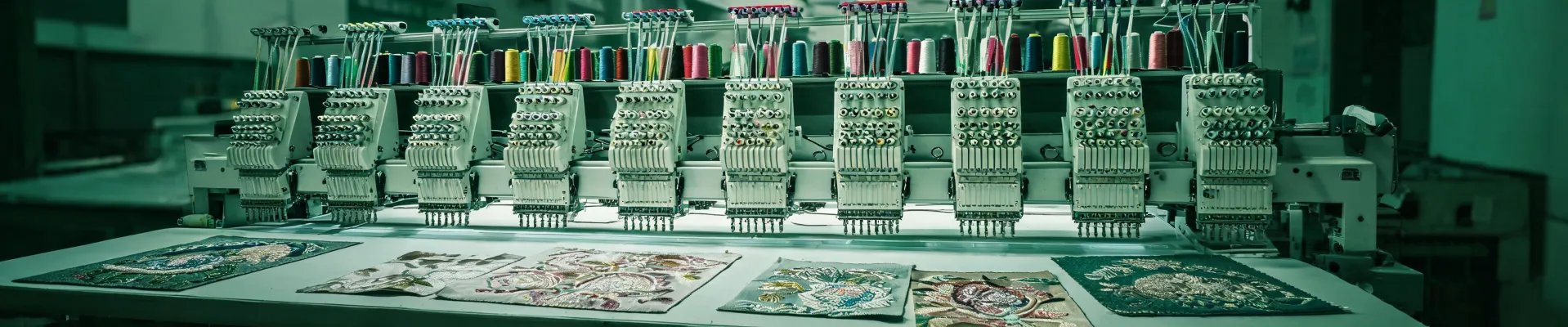
So when a buyer asks me, "what's the barudan 8 head embroidery machine price?" and then hesitates because it's more than the alternative, I show them this math. A used Barudan 8-head costs more upfront. It also has a decades-long track record of being the machine that doesn't call in sick on the worst possible day.
Used Barudan Machines Hold Value—and That Tells You Something
Let's talk about the resale market, because it teaches you more than any spec sheet. Used Barudan embroidery machines come up for sale all the time, and they don't sit long. A shop buys a used barudan embroidery machine, runs it for five years, and sells it for a meaningful portion of what they paid. The depreciation curve on a used Barudan is already flat. The depreciation curve on a new budget machine is a cliff.
I don't have hard data on used-market prices for every make and model. What I can say from coordinating repairs across maybe 30 shops: when someone lists a used Barudan, people line up. When someone lists a used budget machine, it sits. The market has already answered the value question—the prices just reflect it.
One practical note for buyers: Per FTC guidelines (ftc.gov), equipment listings have to be truthful and not misleading. That's a legal hook, not a courtesy. Serious sellers of used machines spec them out carefully because exaggerated claims can be a compliance problem. Use that as a filter—it separates dealers from people who just want the machine out of the parking lot.
Category Confusion: The PE900, the Bridgerton, and the Beginner Problem
Here's the part that surprises people. Some of the most expensive time-sensitive problems I see don't involve industrial machines at all. They come from shops trying to run commercial production on consumer equipment.
The Brother embroidery machine PE900 is a genuinely nice single-head machine for home use. The Bridgerton sewing machine line is charming, approachable, and perfect for someone learning to sew. If you look up "beginner sewing machine recommendations," you'll see these names, and that's deserved.
But they are not production equipment. A PE900 will not survive a 10-hour day of dense logo work. A Bridgerton machine is not built for the duty cycle of a shop with deadlines. About once a quarter, I get a call from someone who started with a PE900, outgrew it, and is now trying to run orders on it because an industrial machine "costs too much." They're not wrong that the price is high. They're wrong that the price is the problem.
The misconception that drives me nuts is the causal story: "buying a nicer machine produces better work." It's backwards. Owning a machine that can handle production is what lets you accept production work. The capability comes first. It's not that Barudan makes you a better embroiderer—it's that Barudan lets you say "yes, we can do that" without a knot in your stomach. That difference is the entire ballgame.
And for beginners reading this in search of sewing machine advice: apply the same logic. Don't buy the cheapest machine that can technically sew. Buy the machine you won't have to replace in eighteen months when your skills outgrow it. The extra $500 now is cheaper than a second machine later. That's the value-over-price math at every scale.
Granted: Budgets Are Real
I can hear the objection: "Easy for you to say. Some of us don't have $40,000 for a used 8-head."
Granted. I've been there—I've spent years making do with equipment that was one step from the scrap heap. And to be fair, some budget machines run for a decade without a hiccup. I've seen it happen.
But here's the distinction that matters: a cheap machine that works is fine. A cheap machine that's cheap because it cuts corners is a tax you pay every month. The problem is you can't reliably tell which one you're buying until it's too late—and by then, you've got a deadline to hit.
What I've seen work, over and over: buy the best-maintained machine you can afford, even if that means buying used. Even if that means waiting a quarter. Even if that means a single-head Barudan instead of a 4-head from a lesser-known brand. The machine that lets you keep promises is the machine that pays for itself.
The Cheapest Machine Is the One That Can't Keep Up
I make my living fixing time-critical production problems. In eight years and 200+ rush jobs, I can count on one hand the times the problem was "the job was too hard." It's almost always "the equipment couldn't keep up."
The cheapest embroidery machine you'll ever buy is the one that can't keep up. It won't just cost you money—it'll cost you clients, credibility, and sleep.
Buy the machine that can keep up. That's not a luxury. Over the life of the machine, it's the most economical decision you can make.

Elise Marceau
Elise Marceau is an LED display and digital-signage systems analyst covering LED video walls, modular screens, transparent LED, control processors, and indoor or outdoor signage. She applies IEC 62368-1 safety principles while comparing pixel pitch, luminance, contrast, refresh rate, colour uniformity, viewing angle, ingress protection, power density, module serviceability, and signal redundancy. Her specification guides help integrators, venue operators, retailers, and procurement teams align viewing distance, ambient light, content format, installation access, electrical load, and lifecycle support.