Used Barudan Embroidery Machines: A Quality Inspector's FAQ on 6-Head, Connected, and Innovation Claims
Posted on 2026-09-14 by Elise Marceau
-
What should I check before buying a used Barudan embroidery machine for sale?
-
Is a Barudan embroidery machine 6 head the right configuration for a growing shop?
-
How does a connected sewing machine change embroidery production?
-
What does embroidery machine innovation actually mean for daily uptime?
-
Can I start with a Brilliance Singer sewing machine and later move to Barudan?
-
What hidden costs should I ask about before buying used?
-
How do I verify specs and avoid misleading listings?
-
What's one thing most buyers miss on used Barudan machines?
I'm a quality and brand compliance manager at an industrial embroidery company. I review every machine before it reaches customers—roughly 200+ used and new units a year. In 2024, I rejected about 15% of first deliveries because specs didn't match. Here are the questions I get most often from shops looking at Barudan equipment, especially used 6-head machines and connected systems.
Quick directory:
- What should I check before buying a used Barudan embroidery machine for sale?
- Is a Barudan embroidery machine 6 head the right configuration for a growing shop?
- How does a connected sewing machine change embroidery production?
- What does embroidery machine innovation actually mean for daily uptime?
- Can I start with a Brilliance Singer sewing machine and later move to Barudan?
- What hidden costs should I ask about before buying used?
- How do I verify specs and avoid misleading listings?
- What's one thing most buyers miss on used Barudan machines?
What should I check before buying a used Barudan embroidery machine for sale?
When I first started reviewing used embroidery machines, I assumed a low-hour Barudan 6-head was automatically a safe buy. Three service calls later, I learned maintenance logs matter more than cosmetics. Check head timing, hook condition, needle bar wear, and whether the control panel matches the serial number. Ask for service records—not just a clean video. The 'low hours' claim (which, honestly, often means the hour meter was replaced) should be backed by documentation.
Per FTC guidelines (ftc.gov), used machine listings must be truthful and not misleading. If a seller says 'refurbished,' they need to substantiate what was actually done.
Also ask what's NOT included: crating, rigging, missing hoops, software licenses, training. A transparent seller lists those upfront. The one who hides them usually costs more in the end.
Is a Barudan embroidery machine 6 head the right configuration for a growing shop?
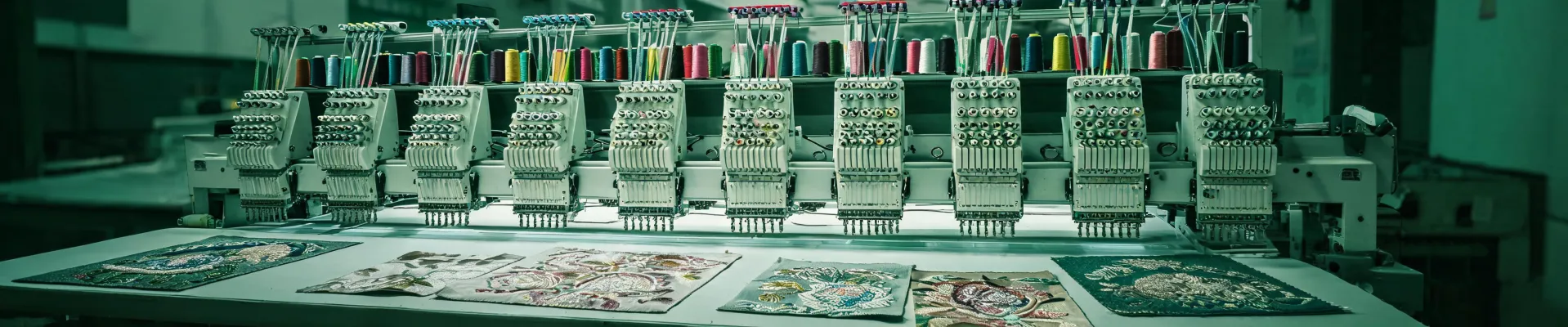
Six heads is often the sweet spot for contract embroidery: enough throughput for small runs, but not so wide that you need a massive floor footprint or three-phase power you don't have. Barudan makes head configurations from 1 to 12, so 6-head sits in the middle. The question is your order profile. If you run 12–50 piece jobs with frequent color changes, a 6-head can keep operators busy without excessive downtime. If you mostly do one-offs or samples, a single-head might be more practical.
We've reviewed maybe 200 machines—no, 240 last year, I'd have to check the log. The 6-head units with documented head timing and consistent tension across all six heads were the ones that passed our audit. The ones with one 'problem head' usually became money pits.
Not ideal, but workable: a 6-head machine with one weak head can still run if you assign simpler designs to that head. Better to fix it before it ruins a 5,000-stitch order.
How does a connected sewing machine change embroidery production?
A connected sewing machine isn't just a marketing label. In practice, it means the machine can report production data—stitch counts, running time, stop events, thread breaks—to a dashboard or ERP. That matters for quality control because you stop guessing why a run slowed down. You can see which head is causing stops, whether an operator is loading hoops efficiently, and when preventive maintenance is due.
From the outside, a connected machine looks like the same frame with a network port. The reality is the data changes how you schedule and price jobs. If you know your true uptime, you can quote lead times with a buffer instead of hoping. Look for open protocols or at least exportable logs. A closed system that only the dealer can read is less useful (and can lock you into service contracts).
What does embroidery machine innovation actually mean for daily uptime?
It's tempting to think innovation means faster speeds or more heads. But most shops don't lose money because the machine is slow; they lose money because it stops. Real embroidery machine innovation shows up in automatic thread trimming, tension control, break detection, and diagnostics that tell you which head failed before you waste 300 pieces.
Barudan has a reputation for reliability and a wide head range, but no machine is immune to wear. The innovation that matters is the one that reduces unplanned downtime and scrap. I've seen shops buy a 'high-tech' machine and ignore the maintenance schedule. Then the innovation becomes a repair bill. Ask for mean time between stops, not just max speed. And ask how software updates are handled—some connected systems require dealer visits for firmware.
Can I start with a Brilliance Singer sewing machine and later move to Barudan?
Yes. A Brilliance Singer sewing machine is a reasonable starting point for learning hooping, backing, and basic digitizing. It's not a commercial multi-head, and it shouldn't be treated like one. But for samples, small personalization jobs, or testing a market, it can work. The trap is scaling before you understand your true costs.
When you move to a Barudan—especially a used 6-head—you're buying into a different workflow: bigger hoops, faster production, and more expensive mistakes. Budget for training, spare hoops, and a service relationship. The best part of finally upgrading from a single-needle machine: no more 3am worry about whether a 12-piece order will finish before the courier arrives. But only if you've done the math on floor space, power, and labor.
What hidden costs should I ask about before buying used?
I've learned to ask 'what's NOT included' before 'what's the price.' The list is longer than most buyers expect: crating, freight, rigging, customs, missing hoops, needles, bobbin cases, software licenses, training, and the first service call. A used Barudan embroidery machine for sale at $18,000 can become a $23,000 project by the time it's running.
The vendor who lists all fees upfront—even if the total looks higher—usually costs less in the end. The 'cheap' quote with vague shipping and no hoops? That's how you end up paying for a surprise. Transparency isn't a favor; it's a sign the seller knows their equipment. If they can't tell you what's included, they probably don't know what's missing.
How do I verify specs and avoid misleading listings?
Start with the serial number and build sheet. Confirm the number of heads, needles, voltage, and software version directly with Barudan or an authorized service partner if possible. Ask for a live video showing each head stitching the same design. A still photo of a clean machine tells you almost nothing.
Per FTC guidelines (ftc.gov), used machine listings must be truthful and not misleading. If a listing says 'low hours' or 'fully refurbished,' ask for proof. If they can't provide it, price the risk into your offer.
For color-critical work, remember that thread and fabric affect appearance. Industry standard color tolerance is Delta E < 2 for brand-critical colors. Delta E of 2-4 is noticeable to trained observers; above 4 is visible to most people. Reference: Pantone Color Matching System guidelines. A used machine with worn tension discs can push you outside that range.
What's one thing most buyers miss on used Barudan machines?
Maintenance history. Everyone told me to check needle bar wear. I only believed it after skipping that step once and eating an $8,000 repair bill. The machine looked great—painted frame, clean panel, new-ish hoops. But the hook assembly was worn, and the head timing was off. We caught it after 400 pieces, not before.
From the outside, a used Barudan looks like a painted frame and a control panel. The reality is the value is in head timing, hook condition, and service history. Ask for the last three service invoices. Call the technician who did the work. If the seller hesitates, that's your answer.
There's something satisfying about finding a documented used Barudan. After all the bad listings, finally seeing a machine with real records feels like a win. But it's not luck. It's asking the boring questions before you wire the deposit.

Elise Marceau
Elise Marceau is an LED display and digital-signage systems analyst covering LED video walls, modular screens, transparent LED, control processors, and indoor or outdoor signage. She applies IEC 62368-1 safety principles while comparing pixel pitch, luminance, contrast, refresh rate, colour uniformity, viewing angle, ingress protection, power density, module serviceability, and signal redundancy. Her specification guides help integrators, venue operators, retailers, and procurement teams align viewing distance, ambient light, content format, installation access, electrical load, and lifecycle support.