Why I'll Pay More for a Barudan Embroidery Machine (Even When the Price Hurts)
Posted on 2026-08-18 by Jane Smith
I'd rather pay $15,000 more for a machine that will hit my deadline than $10,000 less for one that might.
That's not a sales pitch. It's a lesson I learned the hard way running a contract embroidery shop for eight years. I've made and documented 12 significant equipment mistakes in that time, totaling roughly $38,000 in wasted budget. But the most expensive mistake wasn't a machine purchase—it was a $3,200 order shipped late because my 'bargain' multi-head went down three days before the deadline.
The mistake that changed my mind
In September 2022, we had a 500-piece cap order due Friday. Every cap needed a 7,000-stitch logo in six colors. On Tuesday, the spindle encoder on our cheap six-head started throwing errors. We called the seller for service and were told they were 'between technicians.' An independent tech couldn't make it until Thursday. The repair cost $890 plus $150 for the emergency call.
We got the machine running Thursday evening, but three heads were misregistered. We re-ran 150 caps, which ate 12 extra hours. The order shipped Monday—late. Our client's promotional event was Saturday, so they had to use another supplier's last-minute rush for their backup needs. They didn't pay the rush fee, and they sent us an invoice for their extra shipping costs. Total loss: around $2,700, not counting the future work we lost.
That's when I stopped arguing about sticker prices.
The real cost isn't the purchase price
People compare embroidery machines like they compare print quotes—whoever's lowest wins. But with production equipment, the total cost includes downtime, missed deadlines, rework, and the hours you spend chasing replacement parts.
Here's my data point: in the past 18 months, we've caught 47 potential equipment-related errors before they became problems. Our Barudan has been down only for scheduled maintenance—1.5 days total. Our previous machine had 22 unscheduled days in two years. At an average of 500 caps per day and roughly $2 of profit per cap, that's about $22,000 in lost profit—just from downtime.
Honestly, I don't have hard data on how often cheap machines fail industry-wide. But based on eight years around contract shops, my sense is they have at least three times the unscheduled downtime of a Barudan. Maybe more.
I'm not a financial analyst, so I can't give you an ROI formula for every situation. What I can tell you from a production perspective is that a machine which runs predictably is worth a lot more than the price difference suggests.
And don't forget shipping. According to USPS (usps.com), First-Class Mail postage is $0.73 as of January 2025. That's a cost you can plan for. But the cost of a rushed replacement shipment after a machine failure? That's not a line item you want to explain to a client.
Why Barudan's design saves production time
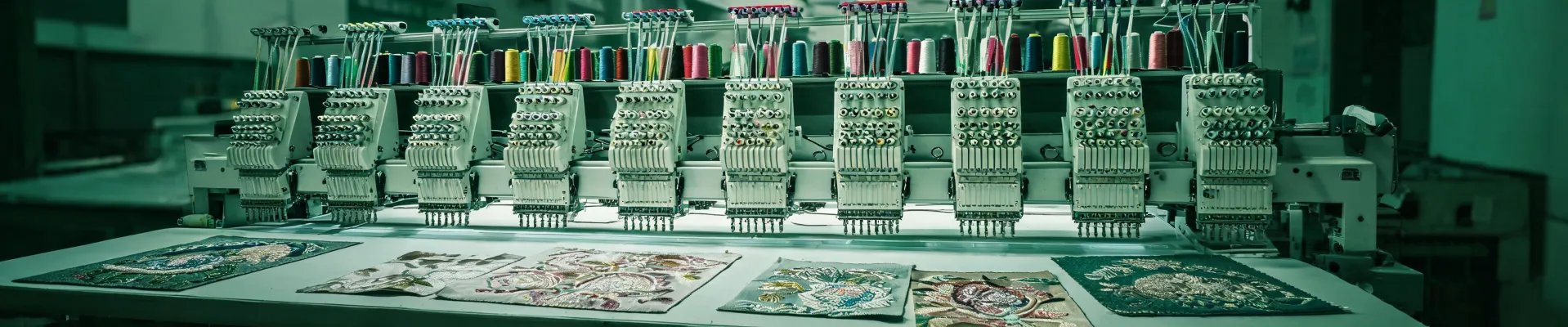
It's not just reliability. The barudan 15 needle embroidery machine (ours is a 12-head with 15 needles per head) is built for continuous production. We can run a six-color logo without stopping to reload thread. On a 500-piece order, that saves hours of labor.
And the magnetic hoops for barudan embroidery machine are a game-changer. We do a lot of caps and beanies, and traditional clamping crushes fabric and costs minutes per hoop. Magnetic hoops cut our setup time from about 4 minutes per cap to under 1 minute. That's 25 hours saved on a 500-piece run. That kind of efficiency doesn't show up on a spec sheet.
Another lesson: use the right embroidery machine stabilizer. I used to buy cheap tear-away to save money. Then we ran a batch of performance polos with a stabilizer too heavy for the fabric. The embroidery puckered on every shirt. That was a $600 mistake in wasted shirts and labor. Now I use a lightweight mesh cutaway for stretch fabrics, and the Barudan's tension control handles it perfectly.
That's also when I learned that a machine built for high-density (HD) embroidery—tiny letters, dense fills, 50,000-stitch logos—has to hold registration at speed. If you're doing HD embroidery machine work on a regular basis, the machine's stability is everything.
What about cheaper alternatives like the Brother SE700?
I often hear people say, 'But a Brother SE700 is only $1,500.' Yes, the brother se700 embroidery machine price is tempting. But that machine is a sewing/embroidery combo made for hobbyists. It has a single needle, a small hoop, and a duty cycle measured in hours, not days. You can't run 500 caps a week on a Brother SE700—it's just not built for that.
I'm not attacking Brother. The SE700 is a fine home machine. But if you're running a business with client deadlines, it's the wrong tool, like using a desktop printer for wedding invitations. You'll spend your time fighting limitations instead of fulfilling orders.
I also want to address the 'used Barudan is still expensive' argument. Yes, a used Barudan costs more than a new generic six-head. But a used Barudan holds its value, and you can find technicians and parts worldwide. With a generic machine, you're on your own when something breaks. That's not a risk I'm willing to take with a Friday deadline.
What Barudan doesn't promise
Let me be clear: I'm not claiming Barudan machines never break down. They're mechanical. Parts wear out. But the difference is predictability. Scheduled maintenance is a choice. Unscheduled downtime is not. And when an emergency does happen, the support network matters more than the part price.
Per FTC advertising guidelines (ftc.gov), claims have to be truthful and substantiated. So when anyone tells you a machine 'never breaks down,' ask for their service records. I've never seen one that lives up to that promise.
After we bought our used Barudan, I kept second-guessing the purchase. What if we overpaid? The first three months were stressful. But after 90 days of flawless production, I relaxed. We haven't missed a deadline since.
Bottom line: buy the certainty
If you shop by price alone, you'll find cheaper machines. You might even get lucky. But when an order is due Friday and your client's event is Saturday, can you bet your reputation on 'probably'?
I can't. Not anymore. I'll pay the premium for a Barudan and treat the extra cost as insurance for the promise I make to every customer. In the embroidery business, your word is your brand. A machine that helps you keep it is worth every cent.
So yes, I'll pay more for a Barudan. Even when the price hurts. Because I've counted the cost of the alternative.

Jane Smith
I’m Jane Smith, a senior content writer with over 15 years of experience in the packaging and printing industry. I specialize in writing about the latest trends, technologies, and best practices in packaging design, sustainability, and printing techniques. My goal is to help businesses understand complex printing processes and design solutions that enhance both product packaging and brand visibility.