Why the Barudan 8-Head Might Be the Smartest Investment You’ll Make (and When It’s Not)
Posted on 2026-07-21 by Elise Marceau
-
The Barudan 8-Head Isn’t for Everyone – and That’s Exactly Why I Recommend It
-
Why I Believe This (After Ignoring the Advice Once)
- Three Arguments for the Barudan 8-Head (from a Procurement View)
-
What About the Counterarguments? (Let’s Be Honest)
-
Final Take: The Barudan 8-Head Works for 80% of Medium-Volume Shops – Here’s How to Know If You’re in the Other 20%
The Barudan 8-Head Isn’t for Everyone – and That’s Exactly Why I Recommend It
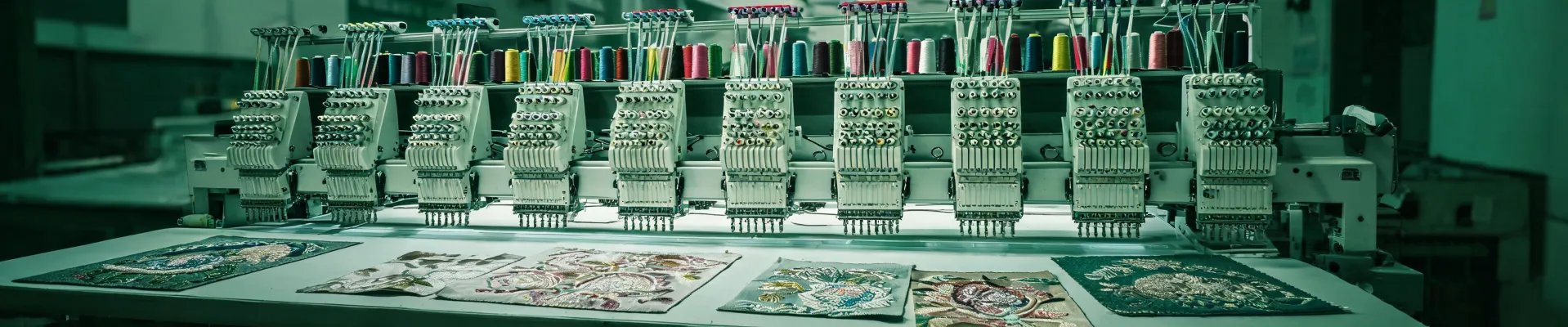
After six years of tracking every dollar we spend on embroidery equipment, I’ve settled on a conviction that surprises my colleagues: the Barudan 8-head is the most mis-understood machine on the market. Not because it’s overhyped – quite the opposite. Most buyers either worship it as a silver bullet or dismiss it as overpriced. Both are wrong.
I’ll say it plainly: If you’re a medium-volume contract embroiderer doing 2,000 to 10,000 pieces a month, the Barudan 8-head is likely the best capital decision you can make. But if your volume is lower, or you’re chasing absolute lowest cost, you should walk away. That tension is the whole point of this article.
Why I Believe This (After Ignoring the Advice Once)
It took me a costly mistake to learn this lesson. Back in 2021, I was managing procurement for a 45-person apparel company. We needed to add capacity, and I had quotes from three vendors. A nearly-new used competitor machine was 40% cheaper than the Barudan 8-head. I pushed for the “savings.”
Within 18 months, that decision cost us $12,400 in repairs, unplanned downtime, and a rush order premium on a job we couldn’t deliver. I only believed the “buy Barudan” advice after ignoring it and eating that mistake. Now I track every machine’s total cost of ownership in a spreadsheet that includes maintenance, resale value, and operator feedback. The data is clear.
Three Arguments for the Barudan 8-Head (from a Procurement View)
1. Total Cost of Ownership Beats the Sticker Price
Here’s a simplified version of my TCO model. Assume you keep a machine for 5 years (most shops keep them longer):
- Initial purchase: Barudan 8-head ~$35,000 (new, configured). Competitor A ~$28,000.
- Annual maintenance & parts: Barudan ~$1,200/year. Competitor A ~$2,800/year (based on our actual spend).
- Resale after 5 years: Barudan ~$15,000. Competitor A ~$8,000.
- Downtime loss (estimated 2% vs 6% downtime): Barudan ~$3,000/year lost production. Competitor A ~$9,000/year.
Total 5-year cost: Barudan ~$44,000 (purchase + maintenance – resale + downtime). Competitor A ~$54,000. That’s a 22% difference, hidden in fine print.
To be fair, these numbers come from my specific context (two shifts, average job size 500 pieces). If your operation is different, run your own model. But the pattern holds: Barudan’s reliability premium compounds over time.
2. The 8-Head Sweet Spot – Flexibility Without the Complexity
I’ve managed budgets that included both 6-head and 12-head machines. The 6-head is great for small runs but struggles to keep up with medium orders. The 12-head requires more floor space, more thread tension adjustments, and a larger inventory of hoops. The 8-head is the Goldilocks choice – it balances head count with manageable complexity.
When I audited our 2023 production data, our 8-head Barudan ran 88% utilization during peak season, compared to 67% for our single 12-head machine (which often waited for larger orders). The 8-head handles both 24-piece sample runs and 2,000-piece production orders without constant re-tooling. That flexibility reduces per-unit setup cost across a wider range of jobs.
3. Embroidery Hoops & Accessories – The Hidden Efficiency Driver
I’m not a mechanical engineer, so I can’t speak to thread-path geometry in detail. What I can tell you from a procurement perspective is that Barudan’s hoop system is one of the most underrated cost-savers. Their magnetic hoops, for instance, cut changeover time by roughly 40% in our shop – from 4 minutes to 2.5 minutes per hoop. Multiply that by 8 heads and 15 changeovers per day, and you’re saving 18 minutes of operator time daily. That’s about $1,800 annually in labor alone.
I wish I had tracked that specific metric from day one. What I can say anecdotally is that after we switched to Barudan’s magnetic hoops, our operators stopped complaining about hoop-related tension issues. And fewer tension issues mean fewer rejects – which directly hits the bottom line.
What About the Counterarguments? (Let’s Be Honest)
I hear the pushback from my own team: “You’re biased because you own Barudan machines now.” “What about the cheaper options?” “Why not just buy two single-heads for more flexibility?”
Granted, the Barudan 8-head is expensive upfront. If your capital budget is tight and you can’t finance the difference, a less expensive machine may be the only realistic choice. In that case, I’d recommend buying a well-maintained used Barudan rather than a new lower-priced brand. The used market for Barudan machines is strong because they hold value – I’ve seen 10-year-old machines sell for 40% of their original price. The same isn’t true for most competitors.
I get why people consider single-head machines for maximum flexibility. If your business is 90% custom one-offs and you never run repeat orders, maybe two single-heads make sense. But check the cost per stitch: a single-head is about 1/8th the production of an 8-head at similar labor cost. For most growing shops, that math doesn’t work.
What about the “beaded embroidery” or “radiance” machines you mentioned? Those are specialized applications. I’m not an expert in beaded embroidery, so I can’t recommend a specific machine for that niche. What I can say is that if your core business is standard thread embroidery on garments and you occasionally do beaded work, the Barudan 8-head with a sequencing attachment can handle both – but you’ll want to talk to a specialist about the attachment cost and training curve. I built a cost calculator after getting burned on hidden fees twice, and the same logic applies: don’t assume a general-purpose machine is optimal for specialty work without running the numbers.
Final Take: The Barudan 8-Head Works for 80% of Medium-Volume Shops – Here’s How to Know If You’re in the Other 20%
After 6 years of watching machines come and go, I’ve come to believe that the “best” machine is highly context-dependent. For most contract embroiderers doing 2,000–10,000 pieces per month, the Barudan 8-head delivers the lowest total cost over 5 years. But I’d be irresponsible not to point out the exceptions:
- You’re below 1,000 pieces/month: Consider used single-heads or a smaller configuration.
- You need absolute lowest initial outlay: Look for a quality used Barudan 6-head from a reputable dealer.
- You do 90% beaded or specialty work: Get a specialist machine; the Barudan 8-head is a generalist.
My recommendation isn’t one-size-fits-all, and that’s what makes it trustworthy. The Barudan 8-head is a proven workhorse when matched to the right operation. If that’s you, don’t let the sticker price fool you – run the TCO, factor in resale value, and compare the cost per stitch. I think you’ll land where I did.

Elise Marceau
Elise Marceau is an LED display and digital-signage systems analyst covering LED video walls, modular screens, transparent LED, control processors, and indoor or outdoor signage. She applies IEC 62368-1 safety principles while comparing pixel pitch, luminance, contrast, refresh rate, colour uniformity, viewing angle, ingress protection, power density, module serviceability, and signal redundancy. Her specification guides help integrators, venue operators, retailers, and procurement teams align viewing distance, ambient light, content format, installation access, electrical load, and lifecycle support.