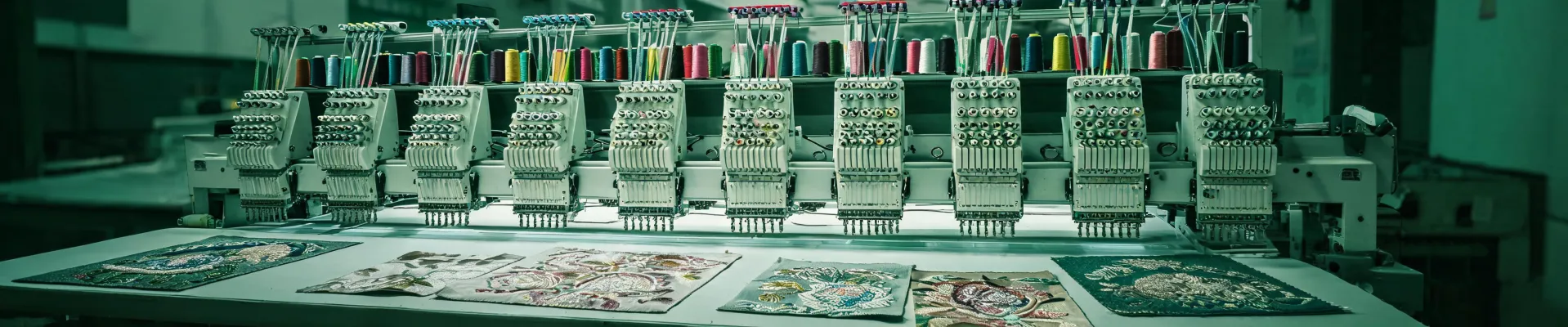
Barudan Embroidery Machine FAQ: Innovation, Hoops, Hat Setup, and the Question Everyone Forgets
Posted on 2026-09-09 by Elise Marceau
-
Is Barudan still the same machine it was decades ago, or is the innovation real?
-
Do Barudan embroidery machine hoops have to be magnetic to be worth buying?
-
Do I need a separate Barudan hat embroidery machine for headwear orders?
-
I already have a computerized sewing machine with embroidery. Why go industrial?
-
What's the latest machine embroidery technology that's actually worth paying for?
-
Is Barudan overkill when you're starting a small embroidery business?
-
What's the question most first-time Barudan buyers forget to ask?
I handle equipment purchasing for a contract embroidery company. I don't run the machines, and I don't sell them. I'm the person who decides which machines, hoops, frames, and software earn a place on the production floor. I've been making those calls since I took over purchasing in 2020, and in that time I've answered the same Barudan questions so often that I finally wrote them down. This FAQ is current as of February 2025.
None of these answers are a sales pitch. They're the questions I wish every buyer asked before signing—plus a few that most people don't think about until the invoice has already been paid.
Is Barudan still the same machine it was decades ago, or is the innovation real?
I understand the skepticism. Search “embroidery machine innovation” and you get pages of marketing language. Then stand a Barudan from 2005 next to a new one, and at a glance they don't look radically different.
But between my first equipment decisions in 2020 and my most recent one in December 2024, I had time to compare them properly. The machines still use needles, thread, and hoops doing what they've always done. Saying the technology hasn't changed, though, is like saying cars haven't changed because they still have four wheels and a steering wheel.
The meaningful updates are on the control side. Design files can go straight from the office to the machine over the network. Tension monitoring is on a touchscreen. Machines can alert an operator to a problem earlier in a run, before we produce a whole batch of bad goods. The old belief that “a Barudan is a Barudan” comes from an era when the improvements were mostly mechanical. That's no longer true.
Does that make an older model useless? No. We still keep an older single-head around for overflow, and it still sews well whenever we need it. But I wouldn't buy an old machine expecting it to feel or operate like a current one.
Do Barudan embroidery machine hoops have to be magnetic to be worth buying?
No. The more useful answer is: it depends on what's slowing you down. If you do flat work on stable fabrics, standard frames are perfectly capable, and there's no urgent reason to replace them.
My own move into magnetic hoops happened in 2024 under less-than-ideal circumstances. A large order came through with a deadline that gave me two days to commit to an expanded hoop package. Normally I would have tested two hoop styles side by side for a few weeks and let the operators weigh in. There was no time for that. I did the fastest review I could, sent the purchase order, and spent the next several days second-guessing myself. What if I had just spent a big slice of the accessory budget on something everyone hated?
They didn't hate it. On stretchy and thin materials, the magnetic hold distributes tension better than the old spring-style frames, and our operators stopped needing as much help hooping awkward pieces. But the process worked out in spite of my rushed decision, not because of it.
So here's my actual recommendation: if you're curious about Barudan magnetic hoops, buy one or two first. Run them on your real jobs for a couple of weeks before you buy a full set. That's the process I would have followed if the deadline had left me a choice. (Note to self: do that next time instead of just recommending it.)
Do I need a separate Barudan hat embroidery machine for headwear orders?
Search for “Barudan hat embroidery machine” and you could easily come away thinking you need a dedicated machine parked next to your multi-head. In most cases, you don't.
Caps are curved and unforgiving. But the hoop and cap frame are what make them possible, not a whole separate machine. In our shop, headwear runs on standard machines with cap frames when hats are a portion of our monthly production. We do the changeover, adjust the hoops, and get to work. A dedicated setup is really about saving time and reducing risk: you don't have to tear down and rebuild between flat stock and caps, and you're less likely to rush the changeover and end up with crooked logos.
If hats are occasional work, invest in quality cap frames first and don't overthink the machine. If headwear is most of what you do, then a machine configured to stay in cap mode might justify itself quickly. Either way, ask the dealer to show you the changeover on the exact model you're thinking about. If they can't or won't, that tells you something about the support you'll get later.
I already have a computerized sewing machine with embroidery. Why go industrial?
That's a fair question. Consumer machines have gotten impressively capable. If you own a computerized sewing machine with embroidery and your workload is one-off gifts and small custom pieces, it might be exactly the right tool.
Industrial Barudan machines solve different problems. They're built to run for hours at a time, take professional frame systems, and hold tension consistently at production speeds. A home combination machine switches between sewing and embroidery, which means it has to make compromises. Those compromises are fine for variety work; they cost real money when you're running the same logo across dozens of garments.
One thing that surprises people: an industrial machine is not more flexible than a home machine. It embroiders, and that's mostly it. If you also need to construct garments, keep a sewing machine around. You might need both—but don't confuse the two categories when you're planning your shop.
What's the latest machine embroidery technology that's actually worth paying for?
Search “machine embroidery latest” and you'll get articles about decorative threads and new stitches. Those are fine for inspiration, but for someone running a commercial shop, the developments that matter are less glamorous.
On the newer machines we've added, the most valuable change is consistency between operators. The machine can store setup profiles for tension and speed by design. When the next shift pulls up the same job, they're not guessing which settings worked last time. That saves time and prevents the small variations that turn into quality complaints.
Better alert systems are another quiet win. Newer models can catch a problem earlier in a run instead of after twenty minutes of wasted stitching. When you're on a deadline, twenty minutes matters.
My advice: when you compare machines, don't let the dealer talk only about stitch speed. Ask what the current generation does differently from a model made five years ago, specifically for production. If the answer is just “it has a bigger screen,” keep asking.
Is Barudan overkill when you're starting a small embroidery business?
Not by itself. But I'd ask a different question: is the dealer taking you seriously? If not, that's a problem with the vendor, not with the size of your business.
When our shop was small, one supplier didn't return my calls after I asked about a used single-head machine. Another supplier spent 40 minutes on the phone explaining cap frames and hoop limitations, knowing I wasn't ready to buy anything yet. A few years later, which supplier do you think got our first new multi-head order? The one that took the time.
Starting small doesn't make you less of a customer. It makes you an early-stage customer, which is different. Look for an equipment partner who treats your first inquiry like the beginning of a relationship, because that's literally what it is.
What's the question most first-time Barudan buyers forget to ask?
File formats. Without a doubt, that's the one.
Everyone at a demo asks about speed, number of heads, and hoop sizes. Almost nobody asks whether the design files they already have will actually run on the machine.
If you're coming from a consumer embroidery machine, this is where your experience can trip you up. Many consumer apps save designs in the brand's own format. An industrial Barudan won't necessarily read those files, and a design may need to be re-digitized into a standard stitch format the machine understands. As of early 2025, .dst is still one of the most common formats in commercial embroidery, but you should confirm what your machine accepts and what your design software exports.
I bring this up because it's the most common post-purchase surprise I see. The machine arrives, everyone's excited, and then someone discovers the artwork needs to be converted or redigitized before the first job can run. That's not a machine flaw. It's a question nobody asked during the sales process. Ask it before you sign, and if you don't already have a digitizer, start looking now. The best machine in the world still sews what your files tell it to sew.

Elise Marceau
Elise Marceau is an LED display and digital-signage systems analyst covering LED video walls, modular screens, transparent LED, control processors, and indoor or outdoor signage. She applies IEC 62368-1 safety principles while comparing pixel pitch, luminance, contrast, refresh rate, colour uniformity, viewing angle, ingress protection, power density, module serviceability, and signal redundancy. Her specification guides help integrators, venue operators, retailers, and procurement teams align viewing distance, ambient light, content format, installation access, electrical load, and lifecycle support.