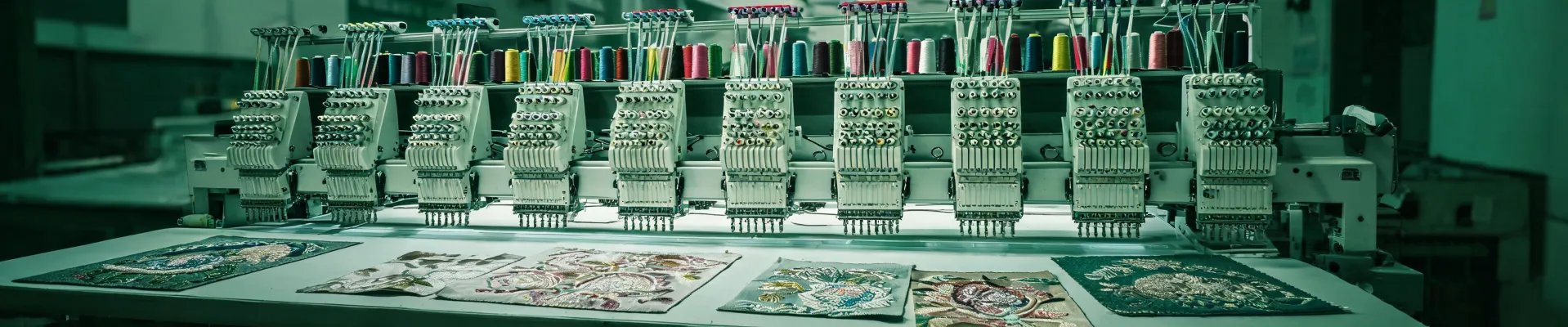
Embroidery production
Barudan Hat Embroidery Machine vs. Flatbed: Which One Actually Saves Your Rush Order?
Posted on 2026-07-22 by Elise Marceau
The Core Difference: It’s About Geometry, Not Just Function
It’s tempting to think a hat machine is just a flatbed with a different cap driver. The “just swap the hoop” advice ignores a critical nuance: the entire sewing field geometry is different. A flatbed machine is designed for flat goods. A Barudan hat embroidery machine (like their Y-series or newer BED models with cap attachments) is engineered around the curved, cylindrical form of a cap. The presser foot, the needle plate, and the rotary hook timing are all configured to keep stitch formation consistent on that curve. This matters for rush orders. Trying to run a steeply curved cap panel on a flatbed is a recipe for broken needles, thread breaks, and missed deadlines. The Barudan hat machine is designed to handle that geometry from the start.Comparison Part 1: Setup & Changeover Time
Flatbed with a cap frame:Setting up a cap on a flatbed frame is fiddly. You have to perfectly align the curve of the cap to a frame that was designed for flat goods. Tension adjustment is manual and finicky. A bad hoop job means registration errors—your front logo shifts left while the back shifts right. On a rush job, you might not notice until you’ve stitched 50 pieces (ugh).
Setup time estimate: 15-25 minutes per cap, including test stitch-outs.
Risk of redo: High. Barudan Hat Machine:
A dedicated hat machine (like a Barudan TH series or any model with a proper cap cylinder bed) uses a clamp system designed for caps. You load the cap, the machine adjusts to the arc automatically. The cap driver ensures consistent tension across the entire sewing field.
Setup time estimate: 5-10 minutes, including a quick test stitch-out.
Risk of redo: Low. The insight: When I compared our Q1 and Q2 results side by side—same vendor, different machine configurations—I finally understood why the details matter so much. The flatbed setup eats time you don’t have on a rush order.
Comparison Part 2: Stitch Quality & Reliability Under Pressure
Flatbed:A flatbed can do excellent work on caps. But it takes a skilled operator who knows the quirks of that specific frame. On a production run of 300 caps, expect 2-3% spoilage on a flatbed due to hooping errors or shifting. That’s 6-9 caps you have to re-stitch at the end of the run. On a rush order, that’s an extra hour of machine time you didn’t plan for.
Spoilage Rate: 2-3%.
Consistency: Variable. Barudan Hat Machine:
The dedicated machine is designed to run caps all day, every day. The cylinder bed provides a stable sewing platform. The cap drive system minimizes shifting. Spoilage is rare unless the cap itself is defective.
Spoilage Rate: <0.5%.
Consistency: High. The insight: The assumption is that rush orders cost more because they’re harder. The reality is they cost more because they’re unpredictable and disrupt planned workflows (causation_reversal). A 2% spoilage rate on a standard order is an annoyance. A 2% spoilage rate on a 24-hour turnaround is a crisis.
Comparison Part 3: The Real Cost (It’s Not Just The Machine Price)
Let’s talk about the barudan embroidery machine price. A new dedicated Barudan hat machine (1-head, like a BED model) costs more upfront than a standard flatbed with a cap frame. The difference is typically $2,000 to $5,000. That seems like a lot. But consider this: On a standard $500 rush order, a single spoilage due to a flatbed’s cap hoop failing costs you the machine time to re-stitch ($50 in labor), the hat itself ($5-10), and most critically, the delay. Missing a $15,000 contract because you couldn’t deliver 200 hats on time? The $5,000 machine premium suddenly looks like an insurance policy.Quoted cost difference: $2,000-5,000 upfront (based on Barudan dealer quotes, late 2024).
Savings avoided: Cost of one major failed order.
Conclusion: Which One Should You Pick?
Go with a dedicated Barudan hat machine if:- Caps/hats are 40% or more of your production volume.
- You regularly handle rush orders with tight deadlines (under 48 hours).
- You are a single operator who can’t afford an extra minute of setup time.
Caps are a rare request (less than 10% of orders). You have a highly skilled operator comfortable with cap frames. You have sufficient lead time to allow for test stitch-outs and potential redo cycles. But if I were in your shoes (and I am, almost every day), and I had to choose one machine to keep us alive during the holiday rush? I’d pick the Barudan hat machine every time. Not because it’s flashy. Because when a client’s event depends on us, the certainty of delivery is worth the premium. It’s a lesson learned the hard way. Prices for specific Barudan models vary. Verify current pricing with authorized dealers. This post reflects experience from a shop that processes over 200 rush orders annually.

Elise Marceau
Elise Marceau is an LED display and digital-signage systems analyst covering LED video walls, modular screens, transparent LED, control processors, and indoor or outdoor signage. She applies IEC 62368-1 safety principles while comparing pixel pitch, luminance, contrast, refresh rate, colour uniformity, viewing angle, ingress protection, power density, module serviceability, and signal redundancy. Her specification guides help integrators, venue operators, retailers, and procurement teams align viewing distance, ambient light, content format, installation access, electrical load, and lifecycle support.