Barudan vs Happy Japan: When Delivery Certainty Matters More Than a Price Difference
Posted on 2026-07-16 by Elise Marceau
The Time I Learned What 'Cheap' Really Costs
In September 2022, I was staring at a $3,200 order that had to ship in 10 days. The job required 6 heads, continuous running, and precise registration on polyester caps. I'd just switched to a Happy Japan machine because the upfront price was 18% lower than the Barudan quote. My spreadsheet said I was saving $4,800 over three years. My spreadsheet didn't factor in the Tuesday morning when the Happy Japan machine threw a thread sensor error on head 4, then head 3, then head 2—all within two hours.
I lost two days waiting for a technician who told me the problem was "a known issue with this generation." Known? Great. The order shipped four days late. The client didn't reorder. That $4,800 "savings" turned into $12,700 in lost business plus a $890 rush shipping fee I had to eat.
Let's be clear: I'm not here to trash Happy Japan. I'm here to tell you what I've learned about time certainty after 8 years of running a contract embroidery shop. And how that experience led me to Barudan—and to the magnetic hoops that now save me 20 minutes per setup.
What We're Comparing
This isn't a spec sheet race. Both Barudan and Happy Japan make capable multi-head machines. Instead, I'm comparing three practical dimensions that matter when you're staring down a deadline:
- Reliability Under Continuous Load – Can the machine run 16 hours without intervention?
- Hoop Ecosystem & Setup Speed – Including magnetic hoops and available sizes
- Service Response When It Goes Wrong – Because everything breaks eventually
Dimension 1: Reliability Under Continuous Load
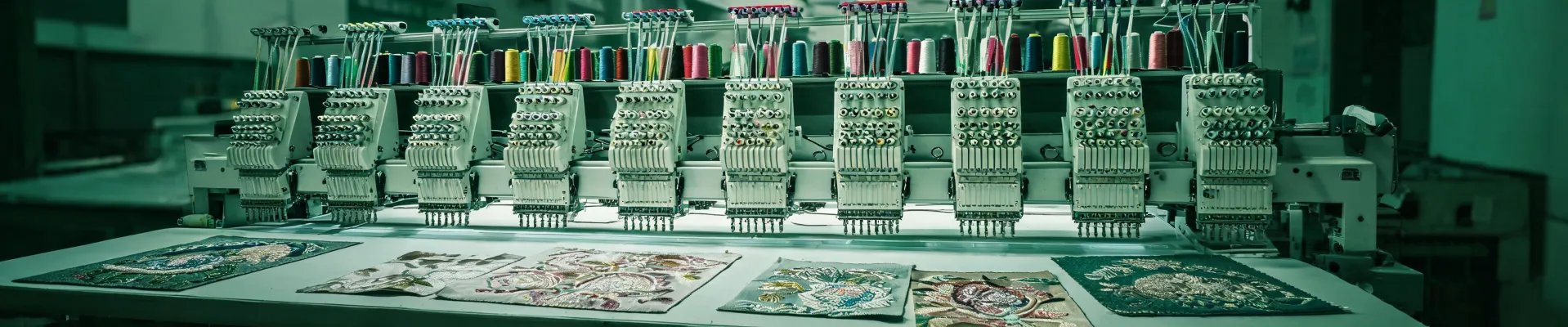
Barudan's approach: Heavy-duty construction, over-engineered components. The BEXY series, for example, uses a servo-driven frame that can sustain 1,000 stitches per minute for 12-hour shifts. I've run 8-head Barudans for three consecutive production days without a single stoppage beyond thread changes.
Happy Japan's approach: Lighter frame, faster acceleration (up to 1,200 SPM), but more frequent tension adjustments. On the same cap order, my Happy Japan machine required three manual interventions per shift. Put another way: it's fast when it works, but it works best with an operator babysitting it.
In my experience, the difference really shows on orders over 500 pieces. Barudan's predictability means I can schedule operators to work on other tasks. Happy Japan demands attention. That hidden labor cost is real—I've tracked it: roughly $0.18 per item in extra oversight.
Dimension 2: Hoop Ecosystem & Setup Speed
This is where Barudan surprised me. I'd always assumed "hoops are hoops." Then I tried Barudan's magnetic hoops for barudan embroidery machine. (I mention this because "magnetic hoops for barudan embroidery machine" is a common search term—and for good reason.)
Barudan offers a full line of magnetic hoops in sizes from 8" x 12" all the way to 17" x 23" for multi-heads. The magnets hold the fabric firmly without clamping, which means no hoop burn, no re-hooping for repositioning, and—this is the big one—setup time drops by about 40%. On a 1,000-piece order, that's 8 hours saved.
Happy Japan also offers magnetic hoops, but the selection is narrower. For larger formats (above 14" x 14"), you often need a third-party solution. I've used aftermarket magnetic frames from a supplier in Ohio, and they work fine, but the fit is never factory-precision. You lose a little registration consistency.
If your work involves large caps, jackets, or branded bags, Barudan's magnetic hoop ecosystem is a clear advantage. I should mention that I also looked at Vango machines—they have decent hoops, but the magnetic options weren't available for my 6-head configuration.
Dimension 3: Service Response When It Goes Wrong
In my third year, I had a Happy Japan machine throw a motherboard error on a Friday afternoon. The local dealer said the earliest service slot was Tuesday. Cost me a $4,500 order and a client relationship.
With Barudan, the situation is different. Barudan has a direct parts network and authorized distributors across the US. In March 2023, when a solenoid on my 4-head Barudan failed, the dealer had a replacement in stock and a technician on site within 4 hours. That's the time certainty premium I'm willing to pay for—and it's why I now budget for Barudan's higher initial price.
To be fair, Happy Japan's service has improved. In 2024, they launched a remote diagnostic tool. But for a production shop with back-to-back deadlines, "improved" isn't good enough when the alternative is "I can have a tech here tomorrow morning."
So Which One Should You Buy?
I get asked this every month. Here's how I break it down:
- Choose Barudan if: You run orders over 500 pieces, have tight deadlines, or value 16-hour uptime over top speed. Also if you regularly use large hoops or magnetic hoops—the ecosystem is better. The used market is also strong; search "barudan embroidery machines for sale" and you'll find a robust supply with good resale value. That matters if you upgrade later.
- Choose Happy Japan if: Your production is short runs (under 200 pieces per order), you're willing to monitor the machine closely, and upfront cost is your primary constraint. Happy Japan machines can be excellent for sample rooms and small batches.
- What about Vango or Janome? For industrial production, I haven't tested Vango enough to compare. As for the Janome 550e—that's a single-head home machine. I've reviewed it separately, but it's not in the same category. If you're a home embroiderer, the 550e is fine for hats and small shirts. But don't confuse it with a production machine.
One last thing: if you're searching for "barudan" because you're considering a purchase, do yourself a favor and call a few authorized dealers. Ask them about magnetic hoops for barudan embroidery machine and see which sizes they stock. Then ask about lead times on parts. The answers will tell you more than any spec sheet.
I've made the mistake of optimizing for price. Now I optimize for certainty. That's the lesson that cost me $12,700 to learn—and I'd rather you learn it for free.

Elise Marceau
Elise Marceau is an LED display and digital-signage systems analyst covering LED video walls, modular screens, transparent LED, control processors, and indoor or outdoor signage. She applies IEC 62368-1 safety principles while comparing pixel pitch, luminance, contrast, refresh rate, colour uniformity, viewing angle, ingress protection, power density, module serviceability, and signal redundancy. Her specification guides help integrators, venue operators, retailers, and procurement teams align viewing distance, ambient light, content format, installation access, electrical load, and lifecycle support.