The 'Barudan Logo' That Almost Cost Me a $16,000 Mistake
Posted on 2026-08-07 by Elise Marceau
It was a Tuesday in March 2022, and I was in the market for a 6-head embroidery machine. A workwear company had asked if we could handle 1,200 beanies by the end of the month, and my two single-head machines could not do that alone. If I remember correctly, it was a local contractor who said, 'we need this done, or we will find someone who can.' That pressure was the reason I started scrolling through used equipment listings late at night.
I have been running a contract embroidery shop for 11 years. I have personally made, and documented, 14 significant mistakes that cost roughly $23,000 in wasted budget. This one taught me more than most.
The listing that hooked me
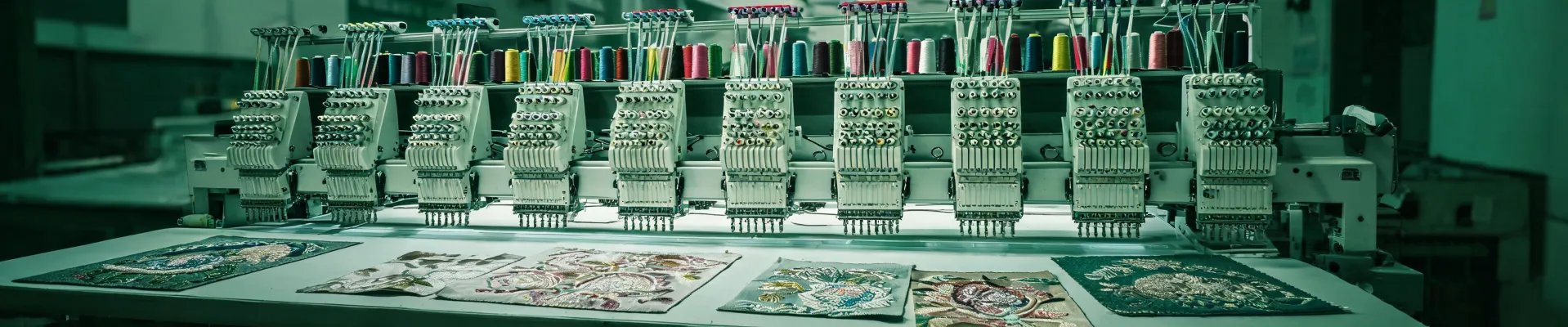
The listing was about an hour from my shop. It said 'Barudan 15 needle embroidery machine,' with clean photos of a 6-head machine. There was also an odd string of terms: 'embroidery dahao machine,' 'hd embroidery machine,' 'industrial pattern sewing machine.' That combination should have made me pause. An industrial pattern sewing machine is not the same thing as a production embroidery machine, and a Dahao control system is not what originally shipped with most Barudan machines. But the price was good, and the seller said they had upgraded to a newer model. What I mean is, I heard what I wanted to hear.
I want to be fair here. My experience is based on about 200 orders and six used machine purchases. If you are working with an authorized Barudan dealer, your experience might differ. But in the used market, the logo on the frame is only part of the story.
The day I drove to see it
The seller met me in a clean warehouse. The machine sat under a fluorescent light, and I noticed the Barudan logo on the arm before I noticed anything else. It looked right. Then I looked at the control box and saw the Dahao name. I asked about it, and the seller said it was a common upgrade that ran better than the original controller. That was, honestly, the moment I should have walked away. I didn't, because the price was $12,000 below the next used option I had seen. The numbers said buy. My gut said something is off. I went with the numbers.
I assumed a Barudan was a Barudan. Didn't verify the controller. Turned out the controller is the brain, and the brain changes how the machine works in a production shop.
Dahao is a well-known brand in the embroidery machinery world, and I have seen it do good work on single-head machines. But it is not what I expected to find in a Barudan 15 needle embroidery machine. There is nothing inherently wrong with Dahao units. They are just a different animal. At least, that has been my experience with used industrial embroidery machines.
The test run and the HD phrase
The seller ran a small logo on one head. If I remember correctly, the test run lasted about twelve minutes before a thread skipped and wrapped around the take-up rail. The seller smiled, adjusted a tension dial, and said it was normal for a cold machine. I knew I should ask for a longer multi-color file with small lettering on every head, but I thought, 'what are the odds?' The odds caught up with me on the first production run.
The listing also used the phrase 'hd embroidery machine.' I assumed that meant high definition, as in crisp, clean stitches. Looking back, I think it was just search bait. If the manufacturer's official spec sheet does not use a phrase, don't give it a meaning in your own head. Same with 'industrial pattern sewing machine.' That is a real category of equipment, but it is for bar tacks and labels, not multi-head embroidery production. They are cousins, not twins.
What happened after I bought it
The machine arrived on a rainy Wednesday. The first job was 400 beanies from that same contractor. We loaded a file that had worked fine on our other machine, pressed start, and immediately saw the problem. The letters had gaps. The thread trims were landing in different spots. Every color change felt slower because the controller approached the sequence differently.
The machine did not explode. The heads sewed, the needle bars moved, and the Barudan mechanical parts did what they were supposed to do. But the file conversion between our design software and the Dahao controller changed the stitch path just enough to ruin tight lettering. For large, simple logos it was fine. For dense, small text, it was a mess. Put another way: I bought the cheapest machine I could find and then paid for that discount in labor, re-digitizing, and lost production time.
I spent about $2,100 on outside help to convert and rebuild files. I lost three weeks of production during the season when I needed it most. Then, to be honest, I sold the machine to a technician who works with Dahao systems daily. For him, it was a good machine. For me, it was a bad fit. That was not the machine's fault. It was mine for not researching the controller.
The whole adventure cost me around $16,000 once you add the purchase, the re-digitizing work, and the loss when I sold it. I have no one to blame but myself. The math had looked great on a spreadsheet.
What I learned
Looking back, I should have demanded a full multi-head test with a multi-color file before paying the deposit. At the time, the seller seemed patient and the price was good. I told myself I could fix any issue afterward. That was a costly way to think.
I also should have searched the phrase 'embroidery dahao machine' before getting in the car. It is a real product category, but it is not the same as a Barudan 15 needle embroidery machine in original configuration. If a listing mixes those terms, treat it as a clue, not a typo.
If you are shopping for a Barudan, the Barudan logo is a good starting point. It is not proof of the machine's full history. Ask about the controller. Ask about the model. Ask about conversions. The boring questions are where the truth lives.
The checklist I use now
Since that experience, I have used this same checklist before every machine purchase. It has caught 47 potential errors in the past 18 months, not just for me but for my team.
- Get the exact model number and the control system model. Ask for clear photos of the control box, not just the side with the Barudan logo.
- Run a multi-color file with small lettering on every head, not one small logo on one head.
- Ask directly if any component is an aftermarket retrofit. If the answer is vague, assume yes.
- Search the controller name before you get in the car. See how common replacement parts are and whether your digitizing software supports that specific system.
- Ignore vague phrases like 'hd embroidery machine' unless the manufacturer's own spec sheet uses the same phrase.
- Know the difference between an embroidery machine and an industrial pattern sewing machine. If you need bar tacks and labels, buy the pattern machine. If you need production embroidery, buy an embroidery machine.
One more thing. Per FTC guidelines (ftc.gov), advertising claims need to be truthful and substantiated. If a used equipment listing is misleading, that is worth knowing if you get legally burned. But it will not get your deposit back or make your delivery date.
There is no perfect machine for everyone. A Dahao-controlled Barudan might be a great value for someone who knows that system. It just was not right for my shop. If you are comparing options, start at the logo, but do not stop at the logo.

Elise Marceau
Elise Marceau is an LED display and digital-signage systems analyst covering LED video walls, modular screens, transparent LED, control processors, and indoor or outdoor signage. She applies IEC 62368-1 safety principles while comparing pixel pitch, luminance, contrast, refresh rate, colour uniformity, viewing angle, ingress protection, power density, module serviceability, and signal redundancy. Her specification guides help integrators, venue operators, retailers, and procurement teams align viewing distance, ambient light, content format, installation access, electrical load, and lifecycle support.