The Hidden Cost of a Cheap Used Barudan: What I Learned From 47 Rush Orders
Posted on 2026-07-29 by Elise Marceau
You Found a Bargain. Now What?
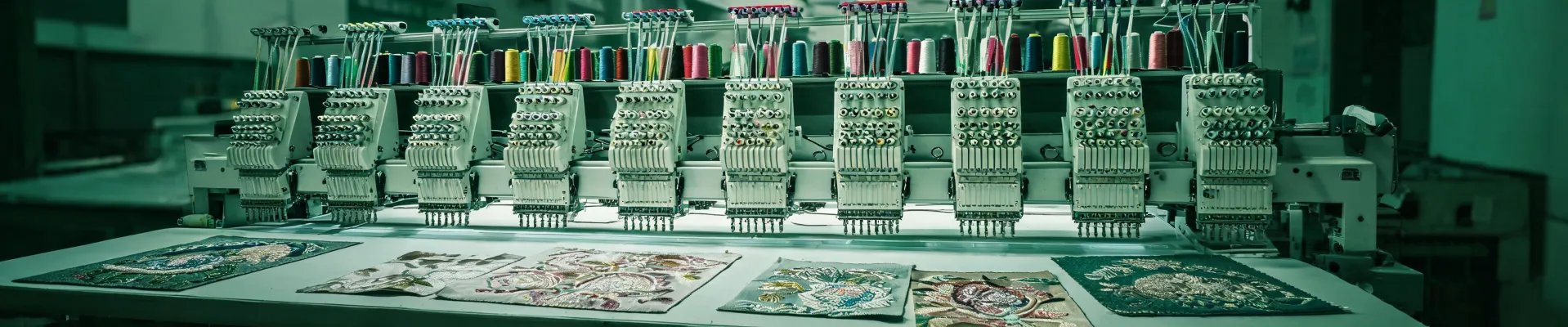
I remember the call like it was yesterday. A client had just bought a used 6 head barudan embroidery machine for $8,500—half the price of any other listing. They were thrilled. Two weeks later, they called me in a panic: a deadline was 72 hours away, the machine had a tension problem they couldn't fix, and the repair shop was quoting $2,200 just for a diagnosis. Suddenly that "bargain" didn't look so smart.
In my role coordinating rush orders for a contract embroidery company, I've handled upward of 47 jobs with same-day or next-day demands. I want to say we've only lost a couple due to equipment failure—maybe three, though I'd have to check the data. But the ones we did lose? They almost always traced back to a decision made months earlier: the decision to buy a used machine based on price alone.
The Surface Problem: "I Can Get a Used Machine for Cheap"
It's tempting to think a used barudan embroidery machine is a straightforward bargain. The sticker is lower, the specs look similar, and the seller promises it was "lightly used." Most buyers focus on that headline number—the cost of the machine. They compare $8,500 vs. $15,000 and pat themselves on the back.
But there's a deeper issue here, and it's one a lot of people miss until it's too late.
The Real Problem: Total Cost of Ownership (TCO)
The question everyone asks is, "What's your best price?" The question they should ask is, "What's included in that price—and what's not?" Because with a used industrial embroidery machine, what's not included can cost you your contract.
Let me break down the hidden costs I've seen sink otherwise solid businesses:
1. Parts Availability & Service History
Barudan machines are built like tanks—I'll give them that. But a 10-year-old 6 head barudan embroidery machine that's been sitting for two years might need new main boards, sensor assemblies, or even a complete thread path overhaul. Most buyers forget that barudan updates its electronics and a lot of older parts become obsolete. I've seen repair estimates run $4,000–$7,000 for a machine that was "working when stored."
If I'm mixing it up with another model, maybe it's not quite that bad, but the point stands: without a current parts catalog and service manual, you're flying blind.
2. Downtime = Lost Revenue
Here's where the rush-order lens really matters. In my world, a machine that's down for three days can kill a contract worth $12,000. If your used machine has a failure during a peak season, you're not just paying the repair bill—you're losing the revenue from the orders you can't fill. Plus, you might have to pay rush fees to a contract embroiderer like me to take over the job. That's $500–$1,500 extra, easily.
I had a client who bought a 4 head barudan at auction for $7,200. Three months in, the main drive belt snapped. The local dealer didn't stock the part—had to order from Japan. Ten days of downtime. The client lost two accounts and paid $3,400 in penalties. That $7,200 bargain ended up costing over $15,000 in total.
3. The Hidden Cost of "Good Enough" Setup
Another blind spot: most buyers don't factor in the cost of properly setting up a used machine. You'll need hoops (especially magnetic hoops for small runs), software upgrades, and often a technician to calibrate the machine for multi-head consistency. I've seen clients spend $1,200–$2,500 on setup fees alone. They didn't budget for it, so it all goes on a credit card at high interest.
The $500 quote turned into $800 after shipping, setup, and revision fees. The $650 all-inclusive quote was actually cheaper.
Why This Matters More for 6-Head & 12-Head Machines
The bigger the machine, the bigger the risk. A single head might run you $3,000–$5,000 used; a 6 head or 8 head starts at $10,000. But if you're running a contract shop, the opportunity cost of a machine failure scales with the number of heads. A 12 head barudan down for a week is a disaster. I've seen it happen—and the TCO of that "cheap" 12-head was astronomical.
Ironically, when I'm triaging a rush order, I often recommend our clients buy from reputable dealers with warranties, even if it costs more upfront. The reason: it lowers the long-term cost of emergencies.
What You Should Do Instead: A Simple TCO Framework
I'm not saying don't buy used. I'm saying don't buy used blind. Here's what I ask before any purchase:
- Get a service record. If the seller can't provide invoices from the last two years, add $3,000 to your budget for a pre-purchase inspection and potential parts replacement.
- Check parts availability. Call Barudan America or your local dealer. Ask if the model is still supported. If not, walk away—or budget for a retrofit.
- Factor in hoops and upgrades. A used barudan embroidery machine often comes with worn-out hoops. Budget $400–$800 for new hoops and magnetic hoops if you do caps or small items.
- Add a 15% contingency. Set aside 15% of the purchase price as an emergency fund for the first year. If you don't use it, great. If you do, you're covered.
- Calculate your cost per stitch hour. This is the real TCO metric. Divide total purchase price + estimated annual maintenance + downtime costs by the number of stitch hours you expect to run. If that number is higher than what you'd pay a contract shop, reconsider.
One Last Story
In March 2024, a client called at 3 PM needing 800 embroidered patches for a trade show the next day. Normal turnaround is 5 business days. We found a shop with a 12 head barudan that had been serviced religiously. Paid $1,200 in rush fees (on top of the $800 base cost), and delivered by 10 AM. The client's alternative was losing a $25,000 booth reservation. They later told me they bought a new barudan because of that experience.
There's something satisfying about a perfectly executed rush order. After all the stress and coordination, seeing it delivered on time and correct—that's the payoff. But it only happens when the equipment behind it is reliable.
Bottom line: The cheapest used barudan embroidery machine is rarely the best deal. The machine that has documented service, available parts, and a realistic TCO—that's the one that'll save you from the midnight panic calls.
If you're shopping for a 6 head, 8 head, or even a 12 head used barudan, run a quick TCO analysis before you sign. Your future self—and your next rush order—will thank you.

Elise Marceau
Elise Marceau is an LED display and digital-signage systems analyst covering LED video walls, modular screens, transparent LED, control processors, and indoor or outdoor signage. She applies IEC 62368-1 safety principles while comparing pixel pitch, luminance, contrast, refresh rate, colour uniformity, viewing angle, ingress protection, power density, module serviceability, and signal redundancy. Her specification guides help integrators, venue operators, retailers, and procurement teams align viewing distance, ambient light, content format, installation access, electrical load, and lifecycle support.