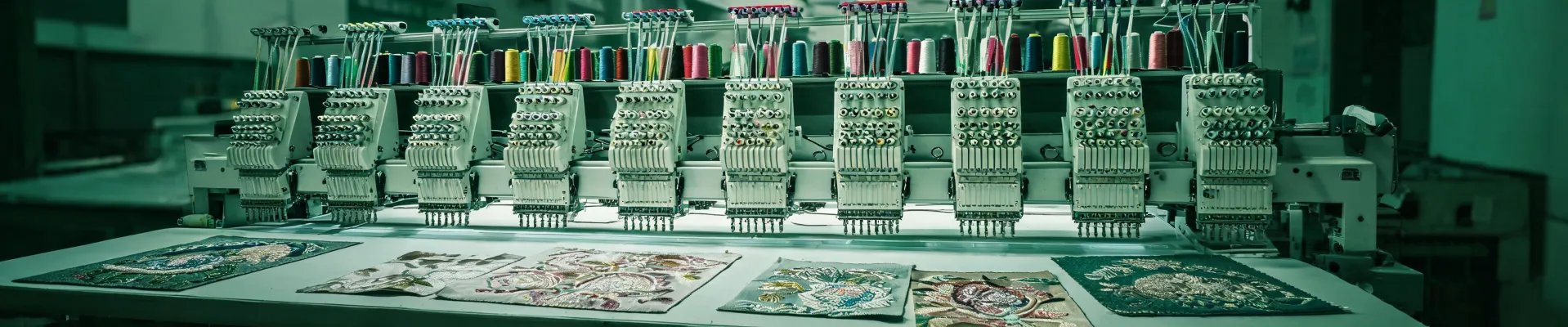
Barudan Embroidery Machine FAQ: Used, Single Head, Celeste, and What to Know in 2025
Posted on 2026-07-28 by Elise Marceau
-
Everything you actually need to know about Barudan embroidery machines
-
Is a used Barudan embroidery machine a smart investment?
-
How can I tell if a used Barudan machine is in good condition?
-
Should I buy a Barudan single head or a multi-head?
-
What's the deal with the Barudan Celeste?
-
What makes a modern computerized embroidery machine different from older models?
-
Is it worth paying more for a certified pre-owned Barudan vs. a no-name brand?
-
How urgent is it to get a machine quickly — should I pay a premium for availability?
-
Is a used Barudan embroidery machine a smart investment?
Everything you actually need to know about Barudan embroidery machines
I'm a quality compliance manager at a Barudan-authorized service center. Every machine that leaves our facility goes through my hands — roughly 150 units a year, from single-heads to 12-head production lines. Earlier this year I had to reject a batch of used machines because the thread tension calibration was off by 15%. That cost one customer their launch date, and cost us a week of rework. Here's what I've learned from the inspection side — questions I hear every week, and a few you probably haven't asked.
Is a used Barudan embroidery machine a smart investment?
Short answer: yes, if you know what you're looking at. Barudan machines are built to run 20+ years with proper maintenance. I've seen 200,000-stitch-hour machines that stitch as cleanly as day one. The catch is that “used” covers everything from a lightly-maintained home machine to a 12-head that survived five years in a production hell. I still kick myself for not catching a hidden frame hook crack on a used 4-head I approved two years ago — the customer had to replace three heads within six months. Lesson: buy from a source that lets you inspect or provides a certified inspection report.
How can I tell if a used Barudan machine is in good condition?
Three things, in order: hours on the machine, maintenance records, and head balance. Hours give you wear context — 5,000 hours is moderate, 10,000+ is heavy. But hours alone don't tell you if the bearings were greased on schedule. I learned never to assume “well-maintained” means documented. After one machine that looked pristine but had a seized lubricator pump (surprise, surprise), we now ask for service logs. If they can't show you records, assume the worst.
Then check the heads. Run a 10cm square in all colors — if any head drifts more than 0.5mm, the bearing bushings or hook timing are off. That's a $200–400 fix per head, if you catch it early. Not ideal, but workable. Ignore it, and it becomes a $1,200 rebuild.
Should I buy a Barudan single head or a multi-head?
Depends on your bottleneck: space or labor. Single-head machines (like the Barudan single head embroidery machine) give you flexibility — you can run different designs simultaneously, and they're easier to troubleshoot. Multi-head (4, 6, 8, 12) maximize throughput per operator. The mistake I see most: small shops buy a 6-head because “more heads = more output”, then realize they need a full-time technician to keep all six running. Start with a single or 2-head, prove your demand, then scale. (Not that anyone listens — the allure of volume is strong.)
What's the deal with the Barudan Celeste?
The Celeste embroidery machine is Barudan's modern single-head platform — compact, servo-driven, and designed for easy color changes. It's basically a computerized embroidery machine commercial shop starter. What surprises people: the Celeste runs the same BERNINA (Barudan's control system) as the industrial multi-heads, so the stitch quality is identical. I have mixed feelings about it. On one hand, it's a fantastic entry point for contract embroiderers. On the other, it's often sold as a “home machine” when it's really a light industrial workhorse. If you plan to run it 40+ hours a week, budget for the same maintenance as a multi-head.
What makes a modern computerized embroidery machine different from older models?
Two things: servo motors and digital tension control. Older machines used clutch motors — loud, inefficient, and hard to control slow-speed stitching. Modern ones (like the Celeste and newer Barudan multi-heads) use direct-drive servos. They're quieter, use 30% less power, and can stitch at 1/10 speed for precise placement. Digital tension control (i.e., the machine adjusts thread tension automatically per color) is the game-changer. I've rejected machines where the manual tension knob was +-20% off spec. Digital systems eliminate that human error. (Real talk: if you're buying used, prioritize servo-driven models. The older clutch machines are cheap but the downtime costs add up fast.)
Is it worth paying more for a certified pre-owned Barudan vs. a no-name brand?
Here's the thing: certification means someone qualified has verified the machine against Barudan's own criteria. A certified used Barudan costs about 50–60% of a new one (based on 2025 dealer pricing I've seen). A no-name Chinese machine costs 20–30% of new, but you're buying an unknown. I assumed “same specifications, same results” once — didn't verify. Turned out the unmarked machine had a knockoff head that couldn't hold tension over 800 rpm. That cost us a $15,000 order. The uncertain cheap option is more expensive than the certain premium one. Especially if you have a deadline.
How urgent is it to get a machine quickly — should I pay a premium for availability?
In March 2024, a customer needed a 6-head within two weeks for a contract that had a $30,000 penalty for late start. We had a certified used unit ready but it was $6,000 more than a similar machine from a private seller. He went cheap. The private seller couldn't deliver for six weeks, and the customer missed the deadline. He lost the contract. The $6,000 premium would have been a fraction of that loss. I have mixed feelings about rush fees — they feel like gouging. But the operational chaos of a broken machine or delayed delivery is real. If your timeline is less than 30 days, buy from a source that can guarantee a date. And get it in writing.
One last regret: I didn't specify inspection rights in a used machine contract once. The machine arrived with a broken needle plate and a bent shaft — cost $1,800 to repair. Now every contract I review includes a pre-shipment inspection clause. Better than nothing, but a lesson learned the hard way.

Elise Marceau
Elise Marceau is an LED display and digital-signage systems analyst covering LED video walls, modular screens, transparent LED, control processors, and indoor or outdoor signage. She applies IEC 62368-1 safety principles while comparing pixel pitch, luminance, contrast, refresh rate, colour uniformity, viewing angle, ingress protection, power density, module serviceability, and signal redundancy. Her specification guides help integrators, venue operators, retailers, and procurement teams align viewing distance, ambient light, content format, installation access, electrical load, and lifecycle support.