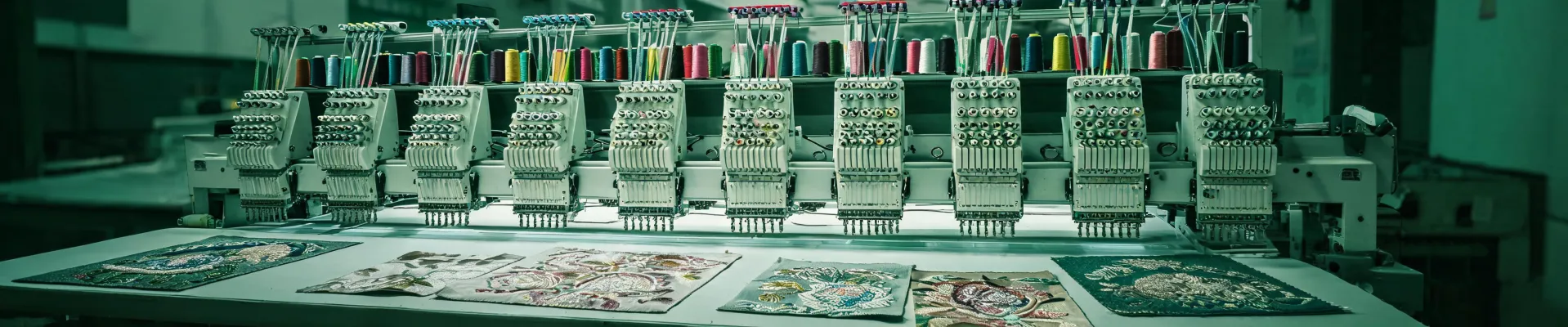
Used Barudan Embroidery Machines, Hoops, and What I Wish I Knew: An Admin Buyer's FAQ
Posted on 2026-09-15 by Elise Marceau
-
What should I check before buying a used Barudan embroidery machine for sale?
-
How many heads do I actually need—and how does head count affect sewing machine output?
-
Which embroidery hoops for Barudan do I need to budget for?
-
Is an xTool embroidery machine a real alternative?
-
What do Singer HD500 Classic sewing machine reviews tell me about industrial embroidery?
-
How do I verify a used Barudan isn’t a money pit?
-
What’s the one thing you wish you knew earlier?
I’m an office administrator for a 40-person apparel decoration company. I manage equipment and supply ordering—roughly $250k annually across a dozen vendors. I report to both operations and finance. I’ve been buying embroidery equipment and parts since 2020. This isn’t a Barudan sales pitch. It’s the FAQ I wish I’d had before we bought our first used machine.
Here are the questions I actually get from other admins and shop owners.
What should I check before buying a used Barudan embroidery machine for sale?
Honestly, the listing price is the least important number. I learned this the hard way in 2021. We found a used Barudan 6-head for $18,000—about $4,000 less than our regular dealer’s quote. My gut said the “low hours” claim was vague. The numbers said save the money. I asked for the maintenance log. There wasn’t one. We walked.
Check these before you wire anything:
- Service history and who did the repairs.
- Hours on the main board and head motors.
- Whether it runs the current software version.
- What hoops and frames are included.
- If the seller can provide a proper invoice. (This matters. A handwritten receipt once cost us $2,400 in rejected expenses.)
Per FTC advertising guidelines (ftc.gov), used equipment listings need to be truthful and not misleading—condition, defects, and what’s included should be clear. If a seller gets defensive about that, that’s your answer.
How many heads do I actually need—and how does head count affect sewing machine output?
It took me three years and about 150 orders to understand that head count isn’t the same as throughput. A 12-head Barudan can run circles around a 6-head on a big repeat order. But if you’re doing small runs, samples, or lots of color changes, the bigger machine just sits there—or worse, it ties up capital you could spend on hoops and backups.
We track sewing machine output by “finished pieces per operator hour.” That number includes trims, color changes, and re-hooping. A 6-head Barudan with fast changeover can beat an 8-head with messy workflow. I’m not 100% sure where the break-even is for every shop, but for us it was around 250 pieces per design. Below that, fewer heads won. Above that, more heads won.
Which embroidery hoops for Barudan do I need to budget for?
Don’t treat hoops as an afterthought. When we bought our first used Barudan, we spent $18,000 on the machine and then another $2,800 on hoops and accessories in the first month. That stung.
For embroidery hoops for Barudan, you’ll likely need a mix of:
- Standard round hoops for caps and small logos.
- Rectangular or square hoops for flat goods.
- Magnetic hoops if you do a lot of delicate fabrics.
- Specialty frames for bags, sleeves, or finished garments.
Ask the seller exactly which hoops are included. “Some hoops” is not a real answer. Also check whether the hoop arms and brackets match your machine model. I’ve seen people buy a great used Barudan, then spend weeks hunting down discontinued hoop brackets.
Is an xTool embroidery machine a real alternative?
If you’ve searched “xTool embroidery machine,” you’re probably seeing laser cutters and engravers mixed into embroidery results. xTool makes laser equipment, not commercial embroidery machines. That’s not a knock—it’s just a different tool.
I actually looked at adding an xTool laser to our shop for cutting appliqué and engraving tags. It’s useful. But it won’t replace a Barudan for production embroidery. This is where clear expertise boundaries matter: a good supplier says what they do well. A laser company isn’t an embroidery company. A home sewing machine isn’t an industrial embroidery machine either.
If your work is mostly one-off custom gifts, a laser plus a home machine might make sense. If you’re producing 200+ embroidered logos a week, you need an embroidery machine—and probably a used Barudan or similar industrial unit.
What do Singer HD500 Classic sewing machine reviews tell me about industrial embroidery?
Not much, honestly. The Singer HD500 Classic is a home sewing machine. Reviews are useful if you’re mending curtains or sewing masks. They don’t tell you how a 6-head Barudan will handle 10,000 stitches per logo at 800 SPM.
I read a bunch of Singer HD500 Classic sewing machine reviews when I first started because I didn’t understand the difference between sewing and embroidery. The terms overlap, but the equipment is different. Home machines are built for intermittent use. Industrial embroidery machines are built for production. Sewing machine output on a home unit might be a few hundred stitches per minute with constant attention. A commercial embroidery machine runs multiple heads unattended for longer stretches.
Don’t compare them by price or brand. Compare them by duty cycle and what you’re actually producing.
How do I verify a used Barudan isn’t a money pit?
I keep a simple rule: budget 20-30% of the purchase price for immediate repairs, parts, and missing accessories. On our last used Barudan, the machine was $22,000. We spent $5,100 in the first six months—new hoops, a tension board, and a service call. The numbers said “cheap machine.” My gut said “check the tension board.” My gut was right.
Ask for a video of the machine running a real design—not just a test pattern. Ask for a stitch-out sample. If you can’t inspect it in person, pay a local technician to look at it. That $300-$500 inspection has saved me from at least two bad deals.
Also verify the invoice and warranty situation. Used machines usually sell as-is, but a reputable seller will still document condition clearly. If they won’t, walk.
What’s the one thing you wish you knew earlier?
I wish I’d understood that vendor relationships matter more than vendor capabilities. It took me about five years of managing procurement to believe that. A used Barudan from a dealer who answers the phone at 7 AM is worth more than a slightly cheaper one from a guy who disappears after the sale.
When I compared two used Barudan machines side by side—same head count, similar hours—the difference was the support. One seller gave me a service contact and a parts list. The other said “it runs, you’ll figure it out.” We paid $1,200 more for the first one. That $1,200 probably saved us $4,000 in downtime.
So if you’re shopping for a used Barudan embroidery machine for sale, don’t just ask about the machine. Ask who fixes it when it breaks. That answer is the real price.

Elise Marceau
Elise Marceau is an LED display and digital-signage systems analyst covering LED video walls, modular screens, transparent LED, control processors, and indoor or outdoor signage. She applies IEC 62368-1 safety principles while comparing pixel pitch, luminance, contrast, refresh rate, colour uniformity, viewing angle, ingress protection, power density, module serviceability, and signal redundancy. Her specification guides help integrators, venue operators, retailers, and procurement teams align viewing distance, ambient light, content format, installation access, electrical load, and lifecycle support.