What Buying a Used Barudan Embroidery Machine Taught Me About Hoops, Budgets, and Saying No
Posted on 2026-08-27 by Elise Marceau
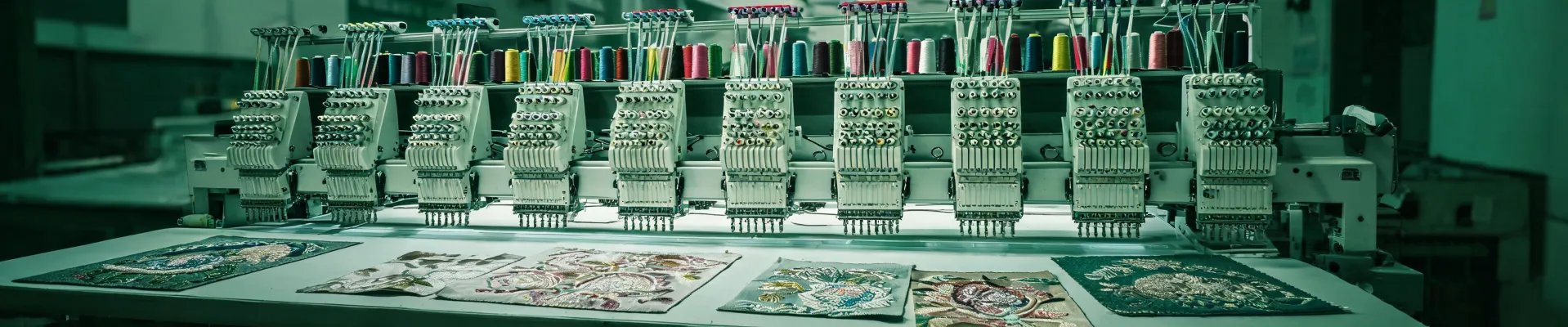
Here's the honest version: the machine is the easy part; the hoops are where a used Barudan deal falls apart. In October 2024, we bought a used 6-head Barudan embroidery machine from a shop in Ohio, and the seller's 'complete set of hoops' didn't fit our tubular frames. That mismatch cost us about $1,800 in re-hooping labor before we replaced them with proper embroidery hoops for Barudan machines. The Barudan itself has been dependable. The accessories nearly made me regret the purchase.
I say this as the office administrator for a 28-person apparel decorating company. I don't run the embroidery department, but I manage purchasing—about $600,000 a year across 12 vendors. When I took over purchasing in 2020, I learned that my job isn't to find the cheapest price; it's to catch the details that turn into invoices after the excitement wears off.
In 2022, I found a great price on a heat press from a new vendor—$1,200 cheaper than our regular supplier. They couldn't provide a proper invoice. Finance rejected the expense; I ate the cost from the department budget. Now I verify invoicing capability, spare parts availability, and service history before any order.
What the used Barudan market actually looks like
The used Barudan embroidery machine market is bigger than you'd think. Barudan machines hold their value because shops upgrade to more heads and the older units cycle into second-tier operations. In our search, we saw 4-head, 6-head, 8-head, and a couple of 12-head machines.
The surprise wasn't the age of the machines. It was how much paperwork followed them. Good sellers had maintenance logs, head counts, stitch counts, and a list of replaced parts. Bad sellers had 'runs fine' and a handshake. We passed on two 'great prices' because the owners couldn't show service history. That felt counterintuitive—these are mechanical workhorses, not computers. But with a machine that runs multiple needles at 800+ stitches per minute, a skipped maintenance period can create tension problems that take days to diagnose. People think used Barudan machines are risky because they're old. In my experience, the risk isn't the head mechanism; it's the undocumented accessories and installation.
Most buyers focus on price per head and completely miss documentation, training, and spare parts (we learned that one the hard way). We budgeted $500 for parts and spent $1,400 in the first three months, mostly on tension assemblies and a cap driver. That's not a Barudan problem; that's a used-industrial-equipment reality.
One detail that mattered: we chose a 6-head instead of an 8-head because our ceilings and electrical service could handle 6 without a transformer. The 8-head would have required a second power run and more floor space. If you're buying used, measure your doorways and check the power panel before you fall in love with a machine.
Embroidery hoops for Barudan: the hidden line item
Here's where I became a hoop nerd against my will. Barudan machines use different hoop systems depending on the model year and whether it's a tubular or flat frame. The 6-head we bought came with a pile of hoops, but most were for a flat table model. Our production manager needs tubular hoops for finished caps and sleeves. The ones we had caused shifting at the edges and skipped stitches.
The question everyone asks is 'How many stitches has the machine run?' The question they should ask is 'Which hoop sizes are included, and do they match the frame type I use?' The phrase 'embroidery hoops for Barudan' is not one SKU. It's a family of sizes, arm types, and spring tensions. We ended up ordering four genuine Barudan magnetic hoops and two tubulars. The magnetic set alone cost about $950 (not including the tubulars). It hurt. But re-hooping labor was eating our margin on every small order.
We also learned that magnetic hoops only work with certain backing weights. We use 1.5 oz and 2 oz cutaway. Thicker backing changes the magnetic hold. It took us three test runs to find the right combination. That trial-and-error doesn't show in the brochure.
Vango and Watt: what we considered instead
Because I'm the buyer, I also priced the obvious alternatives: new single-head and two-head machines, a Vango embroidery machine, and a Watt sewing machine for our sample room. On paper, the Vango looked attractive because the entry price was lower than a comparable used Barudan. The Watt sewing machine is a solid utility tool for basic stitching, and we already have one for hemming.
What pushed us to the used Barudan wasn't brand loyalty. In my opinion, it was the total cost of ownership over three years. The Vango machine in our budget range had fewer needles and a smaller hoop capacity. The Watt unit does what it does, but embroidery isn't its job. We needed 6 heads for contract embroidery, and no single-head or two-head setup would deliver that throughput. So the decision was less about Barudan vs Vango and more about production capacity vs capital cost.
Machine embroidery for everyone sounds nice. It's not automatic.
I've seen the phrase 'machine embroidery for everyone' in marketing. I get the appeal. A used Barudan makes multi-head production accessible for smaller shops, and the internet makes designs available to anyone. But from where I sit, 'for everyone' means 'for everyone who can source the right hoops, maintain the tension, and verify the power requirements.'
We had to install a 240V line and a rotary air compressor before the Barudan could run. Those costs were not in the original budget. If you're shopping for a used Barudan embroidery machine as your first multi-head, include installation in your total, not just the purchase price.
Training is the other hidden line. We paid a retired embroidery technician $85/hour for two days to set up the machine and teach our operator the tension adjustments. That $1,360 was worth every penny. Without it, we would have wasted weeks guessing.
When we order thread, I don't trust screen colors. According to Pantone (pantone.com), the industry standard tolerance for brand-critical color is Delta E under 2. We match thread to physical Pantone chips before production. It's kind of the same discipline as buying a used machine: trust the data, not the photo.
When I'd say no to a used Barudan
I have mixed feelings about recommending used industrial equipment. On one hand, a used Barudan can be a great value if you know what you're looking at. On the other hand, it only makes sense if you have someone who can handle maintenance. We have a production manager who used to repair commercial sewing machines. Without him, I'd have recommended a new machine with a service contract, even if it stretched the budget.
Also, if you're doing mostly small custom samples, a multi-head Barudan is overkill. The setup time eats into the profit. In that case, a single-head or even a good-quality home machine might be the better first step. The 6-head earns its keep when you run the same design across multiple garments. If your jobs are one-off napkins and dog bandanas, start smaller. If you're in that situation, a smaller or new setup is probably a better fit.
If you're shopping for a used Barudan, ask for the service log, the frame type, and a list of every included hoop. Then ask how many hours since the last timing belt replacement. The machine is built to last. The accessories, installation, and training are what separate a bargain from a budget leak.

Elise Marceau
Elise Marceau is an LED display and digital-signage systems analyst covering LED video walls, modular screens, transparent LED, control processors, and indoor or outdoor signage. She applies IEC 62368-1 safety principles while comparing pixel pitch, luminance, contrast, refresh rate, colour uniformity, viewing angle, ingress protection, power density, module serviceability, and signal redundancy. Her specification guides help integrators, venue operators, retailers, and procurement teams align viewing distance, ambient light, content format, installation access, electrical load, and lifecycle support.