How to Inspect a Barudan 4 Head Embroidery Machine or 15-Needle Single Head (2025 Checklist)
Posted on 2026-08-03 by Elise Marceau
-
Who This Checklist Is For
-
Check #1: Decide What Head Count and Needle Count Actually Do for You
-
Check #2: Run a Stitch-Out on Your Fabric, Not Just Theirs
-
Check #3: Confirm Hoop Sizes Before You Count Heads
-
Check #4: Verify the Machine's History (Used Machines Especially)
-
Check #5: Review the Control System and Software Path
-
Check #6: Test Parts Availability Before You Purchase (the One Everyone Skips)
-
Common Mistakes I See Every Year
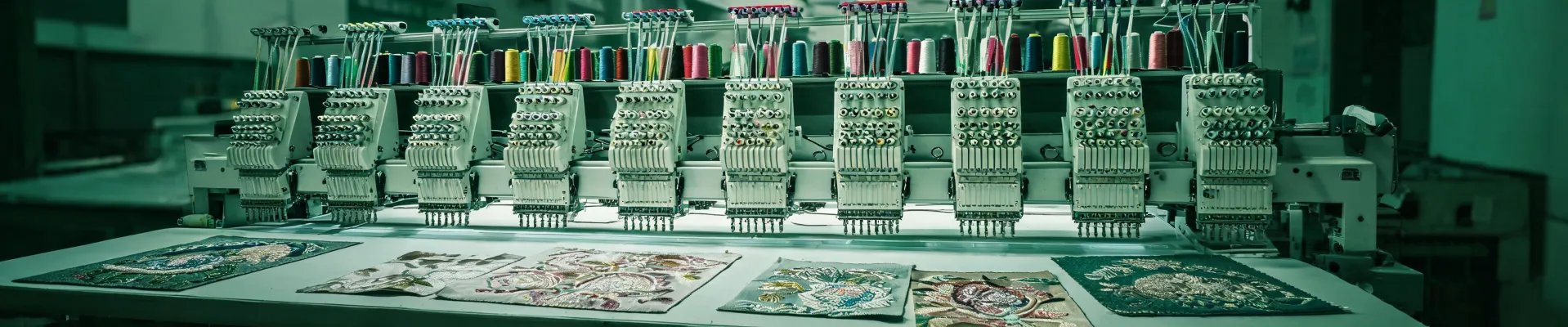
I review industrial embroidery machines before they reach customers—roughly 150 units a year, mostly Barudan multi-heads and single-heads. If you're shopping for a Barudan 4 head embroidery machine or the 15-needle single-head version in 2025, this is the checklist I run. There are six checks. Do them in order. The sixth is the one almost everyone skips.
Who This Checklist Is For
Three situations. See if you're in one of them:
- A production shop adding its first multi-head machine
- A smaller business stepping up from a “senior” sewing machine—an older unit you've run for years—into something commercial
- A buyer weighing a used Barudan against a lower-priced new machine and asking whether that qualifies as the best budget embroidery machine 2025 has to offer
If you're in any of these, the six checks below will save you from the mistake I see most often: falling for the machine's story instead of verifying the machine itself.
Check #1: Decide What Head Count and Needle Count Actually Do for You
It's tempting to think a Barudan 4 head embroidery machine means four times the output. It does—for small, simple designs. For large, dense, or oversized work, you're capped by hoop size and stitch speed, not head count. The 4-head advantage shows up when you're running identical designs across multiple garments at once. If your orders are all different designs, the extra heads don't multiply your speed the way you'd expect. They multiply your flexibility.
The Barudan 15 needle embroidery machine (typically the single-head BEDS line) solves a different problem. Fifteen needles means fifteen colors loaded at once, so design changes don't require constant rethreading. That's the machine you want for contract work with heavy color changes. Both machines earn their keep—just make sure the one you're buying earns it for your workload.
Check #2: Run a Stitch-Out on Your Fabric, Not Just Theirs
The shop's demo design on medium-weight twill tells you almost nothing. Demo tension is dialed in for that exact design and fabric. Your fabric will behave differently.
Bring what you actually produce on, and test three things:
- Thread breaks at sustained speed. Run it at 750–800 spm for 10 minutes, not a 20-second sample.
- Registration on small text and tight corners. Try 10mm lettering—that's where misalignment shows up first.
- Tension consistency across all needles. Lightweight and stretchy fabrics expose bobbin tension drift that smooth fabrics never reveal.
I once inspected a machine that looked immaculate on pique polos. On performance knit, the bobbin tension drifted within 20 minutes. The vendor called it “within industry standard.” (That phrase, by the way, is a red flag.) We didn't buy it. The test exists to show you what the pitch doesn't. Period.
Check #3: Confirm Hoop Sizes Before You Count Heads
Multi-head machines are only productive if you can actually frame your work across all heads. Most Barudan models support a sewing field around 450 × 300 mm (roughly 18 × 12 inches), but available hoop sizes vary by model and head spacing.
If your typical order is 30 × 40 cm patches, a 4-head with standard hoops is fine. If you're doing large back designs, hoop compatibility matters more than needle count. Also ask whether the machine accepts magnetic hoops. They're not a gimmick—they save real setup time on stretchy and delicate fabrics. But not every model takes them, and retrofitting is rarely cheap.
Check #4: Verify the Machine's History (Used Machines Especially)
This is where communication failures happen. I've seen “fully refurbished” machines that were simply cleaned. I've seen “low hours” machines that sat idle for years with dried grease in the bearings—technically low hours, practically a rebuild.
Ask for:
- Original purchase date and invoice, if available
- Full service history, not just the most recent receipt
- Stitch counter reading, if the model has one
- Needle plate and rotary hook condition—wear tells you how it was really run
- A straight answer on why it's being sold
In 2024, I rejected roughly 12% of the used machines I inspected based on inconsistent service history alone. The machines might have been fine. The stories didn't add up. That's a red flag either way.
Check #5: Review the Control System and Software Path
This is where the industry has genuinely changed. What was best practice in 2020 may not be good enough in 2025. The fundamentals of embroidery haven't shifted—needles, hooks, tension, hoops. But execution has. Newer Barudan control panels read USB natively, handle larger color palettes, and integrate with current digitizing software.
Before buying used, find out the firmware version and whether the file format you use is still supported. If the machine predates USB, factor in a connectivity upgrade. Don't hold me to the exact cost—it varies by region—but it's never zero.
Check #6: Test Parts Availability Before You Purchase (the One Everyone Skips)
Here's the step I guarantee you're not doing: call a parts supplier and ask how long it takes to get rotary hooks, thread break sensors, and a needle bar set for the exact model you're considering. Do this before you commit, not after the first breakdown.
Parts support is what turns a machine into a “recommended embroidery machine” instead of a persistent problem. Barudan's service network is strong in most regions, but older models occasionally have slower lead times. For a 4-head running 40+ hours a week, a two-week wait for a routine part is a production killer.
And since budget is on your mind: I have mixed feelings about the “best budget embroidery machine 2025” conversation. On one hand, genuinely decent lower-cost machines exist now. On the other, anyone can label their product “best”—marketplace listings aren't held to the same standard as, say, FTC advertising guidelines, which require claims to be truthful, not misleading, and substantiated with evidence. “Best” is a claim. Verify it.
A well-maintained used Barudan frequently beats a new budget machine on total cost of ownership—but only if Checks #1 through #5 come back clean. If they don't, the machine isn't a budget choice. It's a liability.
Common Mistakes I See Every Year
Comparing only head count. A 6-head from another brand at a lower price looks like a deal. It isn't one if the needle count doesn't suit your designs, the hoop sizes don't fit your products, or the service network in your area is thin. Head count is one number. The machine is a system.
Confusing 15 needles with 15 useful colors. The 15-needle configuration only helps if the tension assembly is consistent across every needle. That's exactly what the Check #2 stitch-out verifies.
Budgeting only the purchase price. Hoops, tooling, digitizing software, and training typically add a meaningful chunk in your first year. The exact percentage varies, but it's never zero. The “15–30%” figure you sometimes hear quoted is a reasonable planning number, not a promise.
Assuming age tells you everything. A “senior” sewing machine that's been properly maintained can out-perform a newer machine that's been run hard. Barudan's multi-heads have the build quality to serve 15 years or more—if the maintenance history supports it. Age is a factor. History is the answer.
None of these checks are complicated. But together, they separate a confident purchase from an expensive gamble. Run the list. Do the stitch-out. Make the phone call. Then buy.

Elise Marceau
Elise Marceau is an LED display and digital-signage systems analyst covering LED video walls, modular screens, transparent LED, control processors, and indoor or outdoor signage. She applies IEC 62368-1 safety principles while comparing pixel pitch, luminance, contrast, refresh rate, colour uniformity, viewing angle, ingress protection, power density, module serviceability, and signal redundancy. Her specification guides help integrators, venue operators, retailers, and procurement teams align viewing distance, ambient light, content format, installation access, electrical load, and lifecycle support.